

Table of Contents
- Why Linen Feels Stiff (and Why It Softens Over Time)
- What You'll Need to Soften Linen at Home
- Step 1: Wash Linen on a Gentle Cycle
- Step 2: Try Natural Fabric Softeners for Linen
- Step 3: Use Dryer Balls and Mechanical Agitation
- Step 4: How to Iron Linen for a Professional Finish
- Troubleshooting: Why Your Linen Still Feels Rough After Washing
- Frequently Asked Questions
Last Updated: September 29, 2026
Why Linen Feels Stiff (and Why It Softens Over Time)
Learning how to soften stiff linen clothes at home starts with understanding why linen behaves this way. Linen is made from flax, a natural fiber with a long, rigid structure that gives it a crisp hand-feel but makes new linen feel rough and board-like.
We hear this often from customers who love the look of linen but not the initial feel. The good news: stiffness is not permanent. Every wash, wear, and tumble relaxes the fibers a little more.
Here is what actually happens:
- Pectin holds the fibers together. Flax fibers contain natural pectin, a gummy substance that stiffens the weave. Water and agitation slowly break it down.
- The weave is tight when new. A fresh linen weave has little room to bend. Over time, mechanical agitation loosens it.
- Fiber relaxation takes patience. Most linen reaches its softest point after 10 to 20 washes, not one.
Linen responds to care, not force. Treat it gently and its drape improves for years.
What You'll Need to Soften Linen at Home
Before you start, gather a few basics, most are already in your laundry room.
- Mild liquid detergent (no bleach, no optical brighteners)
- White vinegar
- Wool dryer balls (3 to 6)
- A mesh laundry bag for delicate pieces
- A steam iron or garment steamer
- A drying rack or clothesline
Skip commercial fabric softener. It coats natural fibers with a waxy film that traps stiffness and reduces absorbency. The methods below work with the fiber instead of against it.
Step 1: Wash Linen on a Gentle Cycle
A gentle cycle with cool water loosens fibers without stressing the weave.
Set your machine to the gentle or delicate cycle. Use cool water, around 60 to 80°F. Add a mild detergent, and use about half the amount you would for cotton. Linen does not need heavy suds.
Here is the sequence that works:
- Turn linen items inside out.
- Place delicate pieces in a mesh bag.
- Choose the gentle cycle with a low spin speed.
- Skip the fabric softener dispenser entirely.
A common mistake is overloading the machine. Mechanical agitation is what softens the fiber, and a packed drum prevents it.
How to Wash Linen Clothes Without Shrinking
The answer is temperature control. Linen shrinks when it hits sudden heat, so keep every step cool or lukewarm.
Wash and rinse in cool water, and never wring the fabric, squeeze gently instead. For a linen blend, check the care label first, because blends behave differently than 100% linen.
One more rule: never wash linen with heavy items like denim or towels. The rough tumbling wears the fiber and causes pilling.
Step 2: Try Natural Fabric Softeners for Linen
Natural fabric softeners for linen relax fibers rather than coating them. The two best options, white vinegar and baking soda, are already in most kitchens.
Vinegar goes in the rinse cycle. Pour half a cup into the fabric softener compartment, or add it during the final rinse.
For a deeper treatment, try this:
- Fill a basin with cool water.
- Add one cup of white vinegar.
- Soak the linen for 30 minutes.
- Rinse and proceed to drying.
Does Vinegar Help Soften Linen Clothes?
Yes, and it is one of the most effective chemical-free softening agents available. Vinegar is mildly acidic, so it dissolves the alkaline detergent film that makes linen feel rough. It also helps prevent shrinkage and fading.
Step 3: Use Dryer Balls and Mechanical Agitation
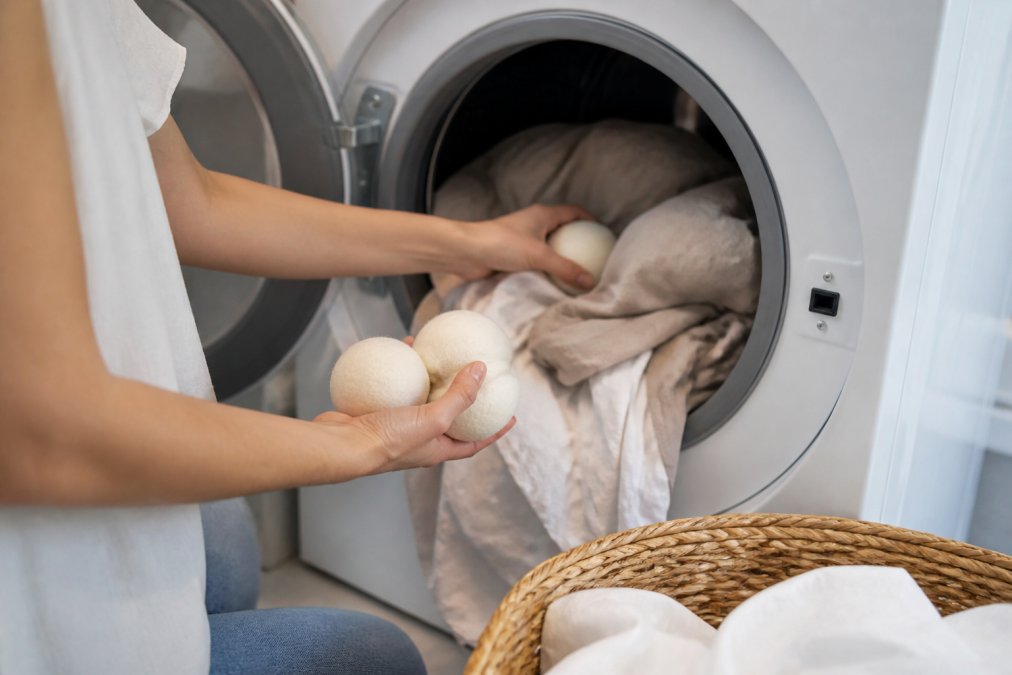
Dryer balls do the physical work that softens linen. As they bounce, they pummel the fabric, breaking down stiffness through mechanical agitation rather than chemicals. This is the single most effective step for new, board-stiff linen.
Match the Method to the Fabric Weight
Not all linen responds the same way. Fabric-specific softening is the difference between a soft result and a frustrating one.
- Lightweight apparel linen (shirts, dresses, pants): Three to four wool dryer balls on low heat for 15 to 20 minutes. These pieces soften fast because the weave is thinner.
- Mid-weight linen (bedding, towels, table linens): Four to six balls, and expect to run two or three cycles before you notice real change. The denser weave needs more agitation.
- Heavyweight upholstery or slipcover linen: Dryer balls alone will not cut it. These pieces need repeated wash-and-tumble cycles, and in many cases a vinegar soak before drying. Treat them as a long project, not a one-time fix.
When You Do Not Own a Dryer
You can get a similar effect by hand. After washing, shake each piece firmly, then scrunch and wiggle the fabric between your hands for 30 seconds per piece. The motion mimics what dryer balls do. A full load takes about 10 minutes of active work, so save it for pieces you wear most.
What Happens If You Put 100% Linen in the Dryer?
It survives, as long as you use low heat and take it out slightly damp. High heat is the real danger.
Here is the practical rule set:
- Low heat: safe, and it softens the fiber.
- Air fluff: safest option, no heat at all.
- High heat: causes shrinkage and fiber breakdown.
- Overdrying: creates stiffness and static.
If Mechanical Agitation Is Not Enough
If you have run multiple cycles with dryer balls and the linen still feels rough, the problem is usually not the agitation. It is mineral buildup from hard water. Minerals, mainly calcium, settle into the weave and create a scratchy, stiff hand-feel that no amount of tumbling will fix. You can check your local water hardness through your utility provider or a U.S. Geological Survey water hardness overview.
Step 4: How to Iron Linen for a Professional Finish
How to iron linen for a professional finish comes down to moisture and heat. Iron linen while still damp, using the highest steam setting your iron allows. But steam is not just for removing wrinkles, it is a softening tool.
Iron vs. Steamer vs. Wear: Which Softens Best
Each method has a different trade-off, and the right choice depends on the piece and how much time you have.
| Method | Softening Power | Best For | Trade-off |
|---|---|---|---|
| Steam iron (damp fabric) | High | Structured pieces, collars, cuffs | Time and effort per piece |
| Garment steamer | Medium-high | Hanging pieces, delicate blends | Less crisp finish |
| Wear and wash over time | Highest (long-term) | Everything | Slow, takes weeks to months |
Details That Make a Difference
- Iron collars and cuffs first, then the body. These areas are the stiffest and need the most steam.
- Hang the piece immediately after pressing. Linen takes a set as it cools, so hanging it while warm helps it hold the shape you just pressed in.
- Store linen on padded hangers, not folded in tight stacks. Folds create creases that stiffen over time.
- Never press dry linen. It fights the iron, scorches easily, and actually feels rougher afterward because the heat sets the fibers in their rigid state.
Pressing linen while damp is the single biggest factor in a smooth result. Dry linen fights the iron. Damp linen cooperates.
A Note on Shine and Scorch Marks
Linen scorches at higher temperatures than cotton, but it still scorches. A shiny patch after pressing means too much heat or a dry area, and shine marks are permanent, so test your iron temperature on an inside hem first. When in doubt, go lower and use more steam.
Troubleshooting: Why Your Linen Still Feels Rough After Washing
If your linen still feels rough, the cause is usually hard water, detergent residue, too much heat, or simple impatience.
| Problem | Likely Cause | Fix |
|---|---|---|
| Rough, scratchy feel | Hard water minerals | Add vinegar to every rinse |
| Stiff after drying | Overdried on high heat | Pull out slightly damp, low heat |
| Coated or waxy feel | Fabric softener buildup | Strip with vinegar soak |
| Still stiff after months | Not enough wash cycles | Keep washing, softening takes time |
Frequently Asked Questions
How long does it take linen to soften?
Linen softens gradually with each wash and wear cycle. Most people notice a difference after three to five washes, especially when using a gentle cycle and dryer balls. Over months of regular use, linen develops a soft, drapey hand-feel that many consider its best quality. Washing less frequently but with proper technique speeds up the process.
Can you use fabric softener on high-quality linen?
Liquid fabric softener can coat linen fibers and reduce their natural breathability, so it is best avoided on high-quality linen. Instead, try natural fabric softeners like white vinegar in the rinse cycle or wool dryer balls during tumble drying. These methods loosen fibers through mechanical agitation and mild acidity without leaving a waxy residue that traps odors.
Why does my linen feel rough after washing?
Roughness after washing often comes from hard water minerals, overdrying, or too much detergent left in the fibers. Mineral deposits from hard water cling to linen and make it feel scratchy. Try adding half a cup of white vinegar to the rinse cycle, use dryer balls on low heat, and remove linen while slightly damp to prevent stiffness from overdrying.
Does vinegar help soften linen clothes?
Yes, white vinegar helps soften linen naturally. Its mild acidity breaks down detergent residue and mineral deposits that make fibers feel stiff. Add half a cup to the rinse cycle of your washing machine. Do not mix vinegar with bleach. For best results, pair vinegar rinses with gentle agitation and low-heat drying to relax the linen weave.


