

Table of Contents
- Head-to-Head Comparison: Linen vs Cotton for Summer
- Breathability and Moisture-Wicking: How Each Fabric Handles Heat
- How to Care for Linen Garments
- Benefits of Organic Cotton Clothing
- Environmental Impact: Water, Pesticides, and Carbon Footprint
- Durability, Wrinkle Resistance, and Skin Sensitivity
- The Best of Both: Linen-Cotton Blends for Summer
- Conclusion
- Frequently Asked Questions
Last Updated: September 30, 2026
Head-to-Head Comparison: Linen vs Cotton for Summer
Linen vs cotton is the defining fabric question of every summer wardrobe, and the answer is not as simple as picking one and dismissing the other. Linen, woven from flax fibers, wins on breathability, moisture-wicking, and heat conductivity. Cotton, a cellulose fiber, wins on softness, wrinkle resistance, and price. At TresAdore, we build summer pieces around both, and around the blends that pull the best from each.
Here is the short version before the detail:
| Feature | Linen | Cotton | Winner |
|---|---|---|---|
| Breathability | High, open weave | Moderate | Linen |
| Moisture-wicking | Fast, dries quickly | Absorbs and holds | Linen |
| Softness | Crisp, softens with wear | Soft from day one | Cotton |
| Wrinkle resistance | Low, creases easily | Moderate | Cotton |
| Durability | Strong flax fibers | Good, weaker wet | Linen |
| Skin sensitivity | Can feel scratchy at first | Hypoallergenic, smooth | Cotton |
| Environmental footprint | Lower water, fewer pesticides | Higher water, pesticide risk | Linen |
The catch most guides skip: fiber content alone does not decide comfort. Weave, fabric weight, and finish matter just as much.
Breathability and Moisture-Wicking: How Each Fabric Handles Heat
Linen moves heat and moisture away from skin faster than cotton, which is why it feels cooler in humid weather. Flax fibers are hollow and highly conductive, so body heat escapes instead of building up. The open plain weave lets air pass straight through.
Cotton absorbs moisture well but holds it. A damp cotton shirt stays damp, and once saturated it clings. That is the difference between moisture-wicking and moisture retention, and it decides how a fabric feels at 3pm.
A few practical notes:
- Fabric weight matters more than the label. A heavy cotton poplin can feel hotter than a light linen-cotton blend.
- Weave changes everything. A tight chambray traps more heat than an open plain-weave linen.
- Thermal regulation is a linen strength. It releases heat as your body temperature rises.
How to Care for Linen Garments
Linen care gets oversimplified into "wash cold, hang dry." The real reason those rules exist is mechanical: flax is a bast fiber with low elasticity, so it has almost no ability to stretch under stress and recover. Heat and agitation don't just shrink linen, they break the pectin that binds the fiber bundles together, which is why a scorched linen shirt feels stiff and brittle rather than soft. Cotton, by contrast, is a seed fiber with more natural crimp and give, so it tolerates a warm dryer far better before it shows damage.
Here is what actually happens at each stage, and how to work with it:
- Washing: Cold water on a gentle or hand-wash cycle. Hot water accelerates fiber degradation and sets wrinkles deeper into the weave. Use a mild, pH-neutral detergent; enzymes and bleach attack cellulose fibers over time.
- Drying: Skip the dryer entirely. Heat is the single biggest cause of irreversible shrinkage in flax. Hang or lay flat away from direct sun, which fades natural dyes and weakens fibers.
- Pressing: Iron while slightly damp on a medium setting, or steam. Dry ironing on high heat scorches the surface and creates a shine you cannot remove.
- Storage: Fold, don't hang. Hanging a heavy linen garment stretches the shoulders and distorts the weave over a season.
A few things most guides leave out:
- Linen softens because fibers relax, not because they wear out. Each wash loosens the pectin bonds slightly, which is why a new linen pant feels crisp and a two-year-old pair drapes like an old favorite. That softening is a feature, not a failure.
- Cotton-linen blends change the care math. The cotton content adds wrinkle resistance and a bit of heat tolerance, but the linen still dictates the ceiling. Treat a blend like linen, not like cotton.
- Weave type affects care, not just feel. An open plain-weave linen dries fast and resists creasing better than a tight chambray or poplin, which traps moisture and shows every fold.
Benefits of Organic Cotton Clothing
Organic cotton's real advantage for summer is not just softness, it is what is not in the fabric. Conventional cotton is one of the most heavily sprayed crops in the world, and residues from synthetic pesticides and defoliants can linger through processing. Organic certification prohibits those inputs, which matters most for people whose skin reacts to trace chemicals in high-heat conditions when pores are open and fabric sits against the body all day.
For summer specifically, organic cotton delivers three things conventional cotton often does not:
- Skin comfort under heat. The fiber is smooth and hypoallergenic, so it rarely triggers the irritation that rough or chemically finished fabrics can cause when you sweat.
- Cleaner dyeing. This is the gap most sustainability guides skip. Conventional cotton is often dyed with synthetic azo dyes and heavy-metal mordants, which can leave trace residues and create toxic wastewater. Organic cotton is more commonly paired with low-impact or natural dyes, which reduces both skin exposure and environmental load. If you have sensitive skin, the dye matters as much as the fiber.
- Better end-of-life behavior. Organic cotton is biodegradable and sheds no microplastics, unlike synthetic blends. As EPA guidance on textile waste notes, textile disposal is a growing share of landfill volume, so a fiber that breaks down cleanly is a real advantage.
The honest trade-off is water.
Women’s Linen Pants, Lightweight →
Environmental Impact: Water, Pesticides, and Carbon Footprint
Flax, the plant behind linen, is the more sustainable fiber on most measures. It grows in rain-fed regions with far less irrigation than cotton, and it needs minimal pesticide input. Cotton is a thirsty crop and, in conventional form, a heavily sprayed one.
- Water consumption: linen far lower than cotton
- Pesticide usage: linen minimal, conventional cotton high
- Biodegradability: linen composts; synthetics do not
- Microplastic shedding: linen none; synthetic blends significant
Durability, Wrinkle Resistance, and Skin Sensitivity
Linen wins on durability, cotton wins on wrinkle resistance, and skin sensitivity splits by person. Flax fibers have high tensile strength, especially when wet, so linen outlasts cotton over years of washing. Cotton is no slouch, but it weakens when wet and thins faster with heavy use.
On skin, it depends on the wearer:
- Sensitive or allergy-prone skin: organic cotton is the safer pick; it is smooth and hypoallergenic.
- Heat and humidity: linen's airflow keeps skin drier, which reduces chafing.
- First wear: linen can feel scratchy until it softens; cotton is soft immediately.
The Best of Both: Linen-Cotton Blends for Summer
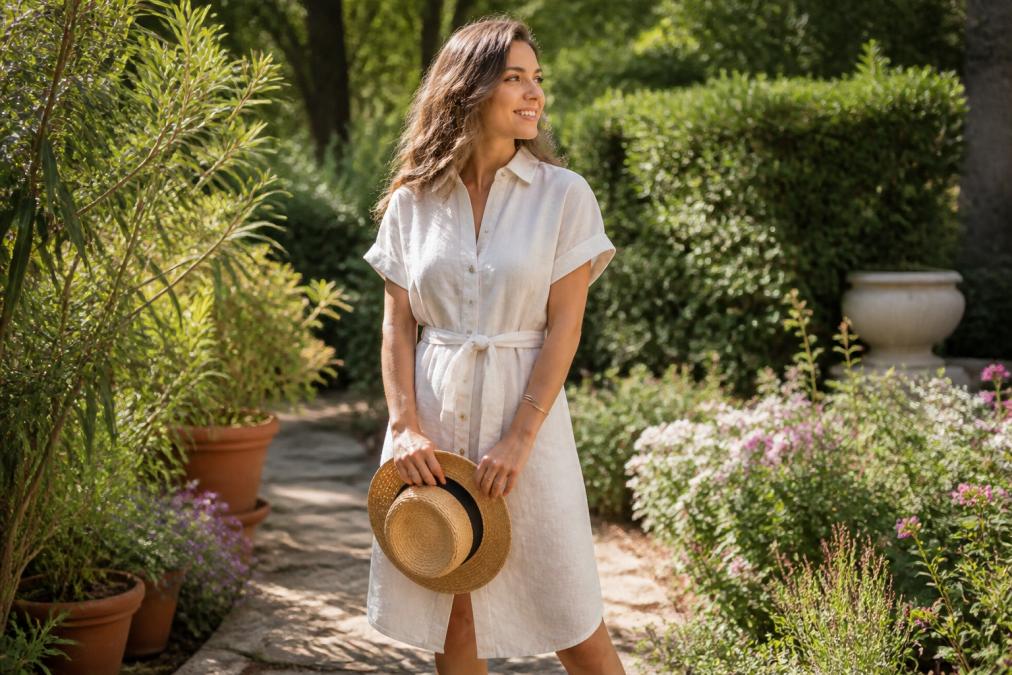
A linen-cotton blend is the practical answer for most summer wardrobes. It combines linen's breathability and moisture-wicking with cotton's softness and wrinkle resistance. You give up a little of linen's raw cooling power, but you gain comfort and easier care.
Conclusion
Choosing between linen and cotton for summer comes down to what you value most: linen for cooling power and longevity, cotton for softness and easy care, blends for both without the trade-off. Whichever you lean toward, the fiber is only half the story; weave and weight decide how it actually feels.
Textile Exchange materials market report
USDA organic cotton production standards
Frequently Asked Questions
What happens if you put 100% linen in the dryer?
Putting 100% linen in the dryer can cause significant shrinkage, especially if the fabric hasn't been pre-shrunk. The high heat breaks down the fibers, leading to a loss of shape and increased wrinkling. To avoid this, always air-dry linen garments flat or hang them to dry. If you must use a dryer, choose the lowest heat setting and remove the item while still slightly damp to minimize damage.
How does the breathability of linen compare to cotton in high-humidity conditions?
Linen outperforms cotton in high humidity because its hollow fibers and natural wax content allow air to circulate and moisture to evaporate quickly. Cotton, while breathable, tends to absorb and hold moisture, which can make it feel clammy. In humid summer weather, linen's superior moisture-wicking and quick-drying properties keep you drier and more comfortable, making it a better choice for hot, sticky days.
Which fabric is more durable for a long-term capsule wardrobe?
Linen is generally more durable than cotton because its fibers are longer and stronger, and it becomes softer with each wash without losing integrity. High-quality linen can last for decades with proper care. Cotton also wears well but may pill or thin over time. For a capsule wardrobe, investing in well-constructed linen pieces ensures longevity and timeless style.
Does organic cotton offer a more sustainable alternative to conventional linen?
Organic cotton is more sustainable than conventional cotton because it uses less water, no synthetic pesticides, and promotes healthier soil. However, conventional linen is often more sustainable than conventional cotton due to flax's low water and pesticide needs. Comparing organic cotton to conventional linen, organic cotton can be a strong choice if you prioritize organic farming practices, but linen still has a lower environmental footprint overall.
How should you care for linen and cotton to ensure they last for years?
For linen, wash in cold water with a gentle detergent, avoid bleach, and air-dry away from direct sunlight. Iron while damp on a medium-hot setting. For cotton, machine wash cold, tumble dry low or air-dry, and remove promptly to reduce wrinkles. Both fabrics benefit from less frequent washing and proper storage. Following these steps will maintain their softness and shape for years.


