

Table of Contents
- The Verdict: What You Need to Know Before Buying
- How Red Light Therapy Works on Your Skin
- What the Science Actually Says About Results
- Red Light Therapy Side Effects and Who Should Skip It
- How Long Does Red Light Therapy Take to Work?
- The Best At-Home Red Light Therapy Devices for Your Routine
- What to Look For in a Device Worth Your Money
- Conclusion: Calculating the Real Value for Your Skin
- Frequently Asked Questions
Last Updated: September 5, 2026
The Verdict: What You Need to Know Before Buying
Red light therapy for the face is worth it if you have realistic expectations, commit to a consistent routine, and choose a device with proven wavelengths and adequate power. It is not a miracle cure for sagging skin, but the science supporting collagen production and cellular repair is stronger than for most beauty tech on the market. At TresAdore, we have tracked this category closely for years, and our verdict is that the technology delivers measurable improvements in skin texture and fine lines for most users who stick with it for at least eight to twelve weeks.

The key distinction buyers miss is that red light therapy is a maintenance practice, not a one-time fix. Unlike a serum that absorbs in minutes, photobiomodulation requires repeated exposure to visible red light and near-infrared wavelengths to stimulate the mitochondria in your dermal layers. This guide breaks down the actual science, the realistic timeline, the side effects, and the specific device specifications that separate tools worth owning from gadgets that collect dust.
How Red Light Therapy Works on Your Skin
Red light therapy is a non-invasive treatment that delivers specific wavelengths of light to the skin to stimulate cellular metabolism and collagen production. The mechanism is called photobiomodulation. When light-emitting diodes emit wavelengths in the 630nm to 850nm range, the energy penetrates the epidermis and reaches the dermal layers where fibroblasts live. These cells respond by increasing ATP production, which accelerates tissue repair and skin rejuvenation.
The practical difference between visible red light and near-infrared matters for device selection. Visible red light around 660nm targets the surface layers, improving skin texture, fine lines, and elasticity. Near-infrared around 850nm penetrates deeper, supporting tissue repair and inflammation reduction beneath the surface. A quality at-home device should offer both, which is why the FDA's guidance on light-based devices requires manufacturers to specify exact wavelengths and intended use rather than making broad claims.
What the Science Actually Says About Results
The evidence base for red light therapy is genuine but narrower than marketing suggests. Clinical trials have demonstrated meaningful improvements in skin elasticity, collagen density, and the appearance of fine lines and wrinkles when treatments are administered consistently over several months (PubMed). However, most published studies use professional-grade panels with power outputs that consumer devices rarely match.
A common mistake is expecting results comparable to injectables or laser resurfacing. Red light therapy works gradually, producing subtle improvements that compound over time. For acne lesions and inflammation, the anti-inflammatory effects can appear faster, often within four to six weeks. For collagen-related concerns like skin elasticity and wrinkle depth, expect a longer runway of three to six months before changes become visible in photographs.
Red Light Therapy Side Effects and Who Should Skip It
The safety profile for red light therapy is excellent for the vast majority of users. Unlike UV light, these wavelengths do not damage DNA, and the treatment is non-invasive with essentially no recovery time. Mild, temporary redness can occur in sensitive individuals, but serious adverse events are rare when devices are used as directed.
Red light therapy is generally considered safe for all skin types because it does not rely on melanin absorption the way lasers do. However, certain individuals should exercise caution. If you are pregnant, have a history of skin cancer in the treatment area, or are taking medications that cause photosensitivity, consult a dermatologist before starting. The American Academy of Dermatology's guidance on light therapy emphasizes that while the modality is safe for most, individual contraindications exist and professional advice is warranted for those with underlying conditions.
How Long Does Red Light Therapy Take to Work?
For most users, red light therapy takes eight to twelve weeks of consistent use before visible improvements in skin texture and fine lines appear. This timeline reflects the biology of collagen production, which requires repeated stimulation over several skin cell cycles.
The supporting keyword "how long does red light therapy take to work" deserves a direct answer because expectations drive adherence. Skin cell turnover takes roughly 28 days, and collagen remodeling occurs over 60 to 90 days. Most clinical protocols run for twelve weeks with sessions three to five times per week, each lasting ten to twenty minutes per treatment area.
| Treatment Goal | Typical Timeline | Recommended Frequency | Session Length |
|---|---|---|---|
| Acne and inflammation | 4-6 weeks | 5x per week | 10-15 minutes |
| Fine lines and texture | 8-12 weeks | 3-5x per week | 10-20 minutes |
| Skin elasticity and firmness | 12-16 weeks | 3-5x per week | 15-20 minutes |
| Maintenance after results | Ongoing | 2-3x per week | 10-15 minutes |
The Best At-Home Red Light Therapy Devices for Your Routine
For most people, the best at-home red light therapy device is one that fits into a daily routine with minimal friction, because consistency matters more than raw power. Professional panels deliver higher irradiance, but a mask you actually use five times a week outperforms a panel you store in a closet.
Our top pick for facial treatment is the Infrared LED Beauty Mask, which combines red light and infrared wavelengths for comprehensive skin rejuvenation. At $219.95, it offers four adjustable intensity levels, making it suitable for both beginners and those who have built tolerance. The hands-free design means you can wear it while reading or working, which removes the biggest barrier to consistent use.

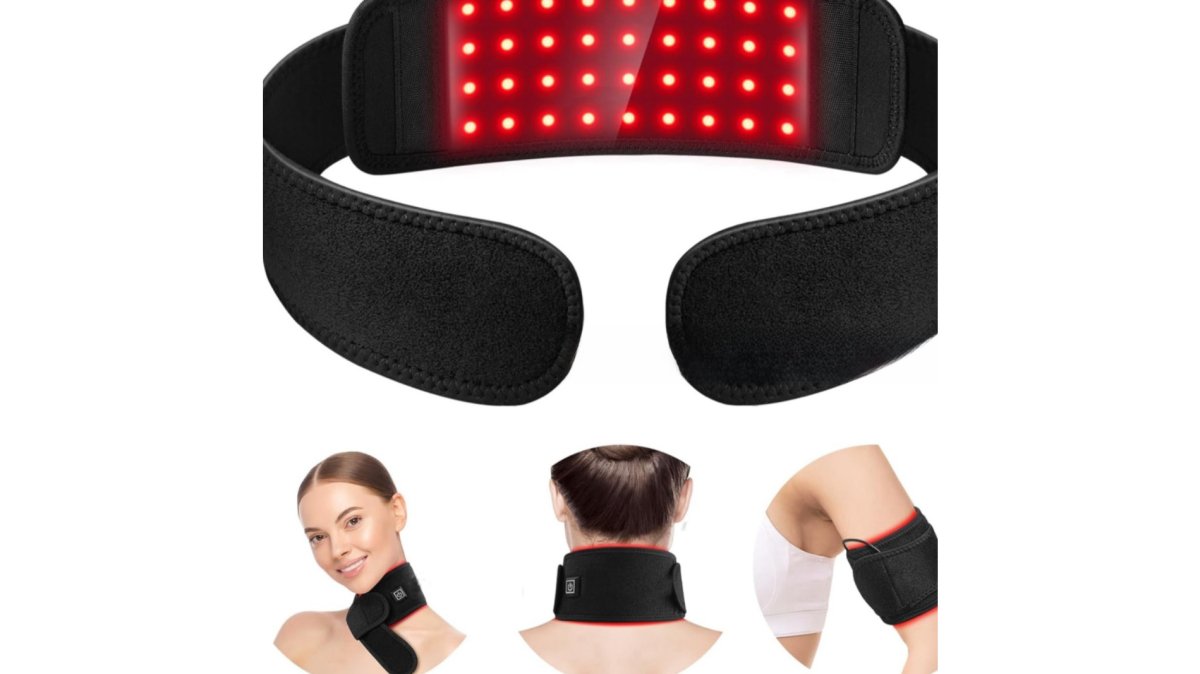
For targeted concerns, the Red Light Therapy Device at $99.95 is an accessible entry point. It delivers 660nm and 850nm wavelengths through 40 triple-chip LEDs and includes a heating function for muscle relaxation. The ergonomic contour fits the neck and wrist, making it a versatile option if you want skin benefits alongside recovery support.
What to Look For in a Device Worth Your Money
Most consumer guides stop at 'check the wavelength,' but that is only the first filter. The real differentiator between a device that produces visible changes and one that merely feels warm is a cluster of technical specifications that manufacturers often bury in fine print. Here is how to read those specs like a clinician, not a marketing department.
Wavelength Accuracy: The Therapeutic Window
The evidence base for skin rejuvenation centers on two bands: visible red light around 660nm and near-infrared around 850nm. Red light at 660nm penetrates the epidermis and upper dermis, stimulating fibroblasts and improving surface texture. Near-infrared at 850nm reaches deeper tissue, supporting inflammation control and collagen remodeling beneath the surface. A device that emits outside this 630nm-850nm window, say, 590nm yellow light or 940nm infrared, lacks the clinical backing for facial anti-aging claims.
But wavelength alone is meaningless if the LEDs are not actually emitting at the labeled spec. Look for devices that publish their emission spectrum or cite third-party testing. Some budget masks claim 660nm but drift to 620nm under load, which falls outside the therapeutic range. If a manufacturer does not disclose the exact peak wavelength, treat the claim with suspicion.
Irradiance: The Number That Predicts Results
Irradiance, measured in milliwatts per square centimeter (mW/cm²), tells you how much energy actually reaches your skin. This is the single most important spec for predicting whether a device will work. Clinical protocols for facial rejuvenation typically use irradiance between 40 and 100 mW/cm² at the skin surface. Below 20 mW/cm², you are essentially shining a colored flashlight on your face, the light penetrates, but the energy dose is too low to trigger a meaningful mitochondrial response.
Here is the trap: many devices advertise a high LED count (100+ LEDs) but each LED runs at low power. A 100-LED mask with 5 mW per LED delivers only 500 mW total, spread across the entire face. A 40-LED panel with 50 mW per LED delivers 2000 mW to a smaller area, a far higher dose per square centimeter. When comparing devices, ask for the irradiance figure at the recommended treatment distance, not just the LED count or total wattage.
Pulse Frequency: The Overlooked Variable
Pulsed light delivery is a feature that separates advanced devices from basic ones. Some research suggests that pulsing light at specific frequencies, commonly 10Hz to 100Hz, can enhance cellular response compared to continuous wave output, though the evidence is still evolving. The practical benefit is that pulsed modes allow higher peak power without overheating the skin, and some users report deeper tissue penetration with pulsed near-infrared.
If you are choosing between two devices with similar wavelength and irradiance specs, a unit with selectable pulse frequencies offers more flexibility for tailoring treatment to your skin's response. However, do not overpay for pulse modes if the base irradiance is inadequate, a continuous-wave device with 80 mW/cm² will outperform a pulsed device with 20 mW/cm² every time.
Power Density vs. Treatment Area: The Trade-Off
A full-face mask covers roughly 300-400 cm² of skin. A handheld panel might cover only 150 cm² but at double the irradiance. This is the central trade-off in device selection. For facial concerns like periorbital wrinkles or nasolabial folds, a higher-dose panel aimed at a specific area may produce faster results than a low-dose mask that covers everything evenly.
Consider the LED red light physiotherapy panel at $199.95 with a 310x310mm treatment surface. It delivers higher power density to a focused area, making it suitable for both facial zones and larger body areas. A mask like the Infrared LED Beauty Mask at $219.95 offers even coverage across the full face but at lower per-area intensity. Neither is objectively better, the right choice depends on whether your priority is broad coverage or concentrated energy.
Duty Cycle and Thermal Management
LEDs generate heat, and heat degrades both the device and your comfort. Check the duty cycle, the ratio of on-time to off-time the device can sustain without overheating. A device rated for continuous operation at full power is preferable to one that forces a cooldown period after 10 minutes, especially since most facial protocols require 15-20 minute sessions. Look for passive cooling (aluminum heat sinks) or active cooling (fans) that maintain stable output for the full session. A device that dims after five minutes because of thermal throttling is not delivering the advertised dose.
The Bottom Line on Specs
A device worth your money publishes four numbers: peak wavelength (630-850nm), irradiance at treatment distance (above 40 mW/cm²), total power output in watts, and duty cycle. If any of these are missing from the product page, email the manufacturer. If they cannot answer, that is your answer. The technology is not magic, it is physics, and the physics must be favorable for your skin to respond.
Conclusion: Calculating the Real Value for Your Skin
The honest answer to 'is red light therapy for face worth it' depends on two variables most reviews ignore: your cost per use over the device's lifespan, and whether you can maintain the protocol after the initial enthusiasm fades. Here is a framework for calculating both.
The Cost-Per-Use Calculation
Professional red light therapy sessions for the face typically run $75-$150 per visit at medical spas and dermatology offices. A standard protocol is two sessions per week for twelve weeks, that is 24 sessions at an average of $100 each, totaling $2,400 for the initial course. Maintenance is typically one session per month at $100, adding $1,200 per year.
An at-home device like the Infrared LED Beauty Mask costs $219.95 upfront. If you use it five times per week for the first twelve weeks (60 sessions) and then three times per week for maintenance (156 sessions per year), your cost per use in year one is approximately $1.02 per session. By year two, that drops to roughly $0.60 per session, assuming the device lasts, which quality units with proper cooling should.
Even a premium device at $500-$800 pays for itself within the first three months compared to professional treatments. The math only breaks down if you abandon the device after two weeks, which is why the consistency question matters more than the sticker price.
The Maintenance Protocol Nobody Talks About
Most articles describe the initial 8-12 week protocol and then stop. But the real value of red light therapy emerges in the maintenance phase, where the cost-per-use advantage compounds. After you achieve your desired results, typically around week 12, drop to two to three sessions per week at 10-15 minutes per session. This maintains collagen stimulation without over-taxing your schedule.
A common pattern is that users who stop entirely see their skin gradually return to baseline over three to six months, because collagen remodeling is an ongoing process, not a permanent structural change. The maintenance schedule is not optional if you want the investment to hold. Budget for 30-45 minutes per week indefinitely, and factor that time into your decision before purchasing.
How to Layer Red Light Therapy with Active Skincare
This is the question dermatology forums are full of but articles rarely answer: can you use red light therapy with retinol, vitamin C, or chemical exfoliants? The short answer is yes, but timing matters.
Retinol and prescription retinoids increase skin photosensitivity, but red light therapy does not involve UV radiation, so there is no increased burn risk. However, applying red light immediately after a retinoid application can increase skin sensitivity and irritation because the light energy increases blood flow and cellular activity in already-stressed skin. The safer protocol is to use red light therapy in the morning or at least two hours before applying retinoids at night.
For vitamin C (ascorbic acid), the interaction is more nuanced. Vitamin C is an antioxidant that can actually enhance the effects of red light therapy by neutralizing the small amount of oxidative stress the light generates. Some users apply a vitamin C serum before their red light session to boost collagen synthesis. The caveat is that certain vitamin C formulations are acidic and can cause stinging when combined with the mild heat from the device. Test on a small area first.
AHA/BHA acids like glycolic and salicylic acid exfoliate the stratum corneum, temporarily thinning the skin barrier. Red light therapy immediately after acid exfoliation can cause flushing and discomfort. Wait at least 24 hours after a chemical peel or strong acid application before using your device. For daily low-dose acids, use red light in the morning and acids at night.
For those ready to build that consistent routine, TresAdore offers a curated selection of red light therapy tools that pair evidence-based wavelengths with designs intended for daily use. Pair your device with a supporting serum like the Copper Peptides Facial Serum at $29.95 to complement collagen stimulation with topical firming ingredients. The real value emerges when technology meets intention, and a consistent practice is the only path to measurable results.

Frequently Asked Questions
Why don't doctors recommend red light therapy?
Many dermatologists hesitate to recommend red light therapy because the clinical evidence, while promising, is still developing compared to established treatments like retinoids or lasers. They also note that results require consistent, long-term use and that many at-home devices are underpowered. A doctor can advise if a device's specifications, like irradiance and wavelength, are sufficient for your skin concerns. It is not that doctors dismiss the technology, but they emphasize managing expectations about the time and consistency required to see meaningful changes.
What is the downside of red light therapy?
The main downside is the commitment. It is not a quick fix; you need to use the device consistently for several weeks or months to see results, and maintenance requires ongoing sessions. The upfront cost of a quality device can also be significant. Additionally, results vary between individuals, and the science is not robust enough to guarantee outcomes for every skin concern. It is a complementary tool, not a replacement for a solid skincare routine or professional dermatological advice.
Is at-home red light therapy as effective as professional treatments?
Professional in-office treatments use higher-power devices that can deliver more energy in a shorter session, which may produce faster results. However, at-home devices offer the clear advantage of consistency, a key factor in photobiomodulation. Using a device daily at home often outperforms sporadic professional visits. When choosing an at-home device, look for one with the correct wavelengths (660nm and 850nm) and a reasonable power output. The best at-home red light therapy devices bridge this gap effectively for long-term skin maintenance.
Who should avoid using red light therapy on their face?
People with photosensitive conditions, like lupus, or those taking medications that cause light sensitivity should avoid red light therapy without a doctor's clearance. Pregnant women should also consult their physician first. If you have a history of skin cancer, it is wise to seek professional advice before starting, as the long-term effects on high-risk skin are not fully documented. It is also recommended to protect your eyes with the included goggles, even though the light is not UV.
The decision to invest in red light therapy comes down to patience and consistency rather than hype. Most people abandon devices within weeks because they expect faster results than the biology allows. Set a twelve-week benchmark, track progress with photographs in consistent lighting, and judge the value at that point. Get started with TresAdore and build a routine that restores your glow through technology you will actually use.


