

Table of Contents
- What Makes Linen the Best Fabric for Sensitive Skin
- Hypoallergenic Fabrics for Sensitive Skin: How Linen Compares
- Linen vs Cotton for Eczema and Dermatitis
- Antibacterial Properties and How Linen Softens Over Time
- Linen for Sensitive Skin: Bedding, Apparel, and Home Textiles
- How to Care for Linen Clothing to Preserve Its Skin-Friendly Properties
- Choosing Linen Pieces Worth Owning
- Frequently Asked Questions
Last Updated: September 1, 2026
What Makes Linen the Best Fabric for Sensitive Skin
Linen works with the body, not against it. Linen consistently rises to the top for anyone dealing with reactive, irritated, or condition-prone skin. Linen is a natural textile derived from flax fibers, prized for its exceptional breathability, moisture-wicking capability, and inherent hypoallergenic properties. Unlike synthetics that trap heat and moisture, linen actively moves perspiration away, reduces friction, and allows continuous airflow.

The Role of Flax Fibers in Skin Comfort
Flax fibers are hollow at the core, giving linen its signature air permeability and allowing heat to escape while fresh air circulates continuously against the skin. The fiber surface is naturally smooth at the microscopic level, reducing friction compared to wool or unprocessed cottons.
Linen is naturally non-toxic in its base form. Flax plants require significantly fewer pesticides than cotton, meaning the raw fiber starts cleaner before manufacturing. For skin that reacts to residual agricultural chemicals, this matters. Look for pieces certified to OEKO-TEX Standard 100 certification requirements, which tests for harmful substances including pesticide residues, formaldehyde, and heavy metals.
The flax fiber also has a natural waxy coating that contributes to antibacterial properties, inhibiting bacterial and fungal growth on the textile surface, particularly relevant for conditions like eczema where microbial imbalance can worsen flare-ups.
Breathability, Thermoregulation, and Heat-Triggered Sensitivity
Heat is one of the most common triggers for skin sensitivity. Raised body temperature causes blood vessels near the skin surface to dilate, intensifying itching, redness, and inflammation in people prone to eczema, urticaria, or contact sensitivity.
Linen's open weave structure and high air permeability allow body heat to dissipate rather than accumulate. Linen absorbs moisture, holding up to a fifth of its weight in water before feeling damp, drawing perspiration away from the skin before it irritates. This is where linen outperforms most alternatives, including lightweight cotton, which absorbs moisture but holds it close to the skin. Linen absorbs and releases moisture through evaporation, creating a cooling effect that actively works against heat-triggered sensitivity.
Hypoallergenic Fabrics for Sensitive Skin: How Linen Compares
Hypoallergenic fabrics minimize allergic reaction risk by avoiding common irritants: synthetic chemicals, abrasive fiber structures, and materials that trap heat and moisture. Linen ranks among the most consistently recommended options.
| Fabric | Breathability | Moisture-Wicking | Hypoallergenic | Softens Over Time | Antibacterial |
|---|---|---|---|---|---|
| Linen | Excellent | Excellent | Yes | Yes | Yes |
| Cotton | Good | Moderate | Generally yes | Minimal | No |
| Polyester | Poor | Poor (synthetic) | No | No | No |
| Nylon | Poor | Moderate | No | No | No |
| Acrylic | Very Poor | Very Poor | No | No | No |
| Bamboo | Good | Good | Generally yes | Moderate | Some |
Why Synthetic Fabrics Like Polyester, Nylon, and Acrylic Cause Irritation
The biggest mistake people with sensitive skin make is choosing based on softness alone. Polyester, nylon, and acrylic feel smooth in stores but perform poorly against living skin. These petroleum-derived, non-porous fabrics trap heat and moisture, creating a breeding ground for bacteria, increasing friction, and raising local skin temperature, all of which aggravate contact dermatitis and eczema. Polyester is a well-documented textile irritant, with dermatologists noting its association with contact sensitivity reactions.
Synthetic fibers also generate static electricity during wear, increasing fabric-to-skin friction and causing physical irritation independent of chemical reaction. Natural fibers like linen don't carry static charge.
According to the American Academy of Dermatology on eczema triggers and clothing, rough or tight-fitting fabrics that don't allow skin to breathe are primary clothing-related triggers for eczema flare-ups. Synthetics fail on both counts.
Dye and Finishing Chemical Sensitivities: What to Look For
The fabric itself may be linen, but dyes, sizing agents, formaldehyde-based wrinkle-resistance treatments, and optical brighteners applied during finishing can cause contact dermatitis. A reaction attributed to "linen" may actually stem from finishing chemicals.
What to look for:
- OEKO-TEX Standard 100 certification: Tests the finished product for over 100 harmful substances, including restricted dyes and finishing chemicals
- Low-impact or fiber-reactive dyes: Bond directly to the fiber rather than sitting on the surface, reducing dye migration
- Undyed or naturally pigmented linen: The safest option for highly reactive skin
- Pre-washed linen: Many finishing chemicals wash out after the first few cycles; pre-washed pieces reduce initial chemical load
Linen vs Cotton for Eczema and Dermatitis
Both linen and cotton are natural fibers and generally better than synthetics, but they perform differently for reactive skin. Cotton is softer initially, which is why it's the default recommendation for sensitive skin. However, cotton absorbs moisture and holds it against the skin. For eczema-prone individuals, prolonged moisture can compromise the skin barrier and trigger flare-ups.
Linen is coarser when new but superior in moisture management. It wicks perspiration away and releases it through evaporation rather than holding it against the skin. For eczema-prone individuals who react to heat and sweat accumulation, linen is the more functional choice despite initial texture differences.
Moisture-Wicking and the Skin Barrier
The skin barrier, the outermost epidermis layer, keeps moisture in and irritants out. When compromised, as in eczema and dermatitis, external moisture, friction, and heat become more damaging.
Linen's hollow fiber structure pulls moisture away from the skin surface and allows evaporation, keeping the microenvironment between fabric and skin drier and cooler. This supports skin barrier integrity. Cotton holds moisture in its fiber structure, meaning a damp cotton shirt stays damp against the skin longer, a meaningful difference for anyone managing chronic skin conditions.
Friction Reduction and Fabric Weave Types
Weave determines how the fabric surface contacts skin during movement, and repeated friction is a known irritant for eczema and contact dermatitis.
Linen weave types vary:
- Plain weave: The most common construction, creating a smooth, even surface. Generally best for sensitive skin.
- Twill weave: A diagonal pattern creating slight texture. Can increase friction for very reactive skin.
- Loosely woven linen: Greater air permeability but more potential for fiber ends to contact skin.
- Linen-cotton blends: Combine linen's moisture management with cotton's initial softness.
A common mistake is buying "linen blend" without checking the ratio. A piece that is primarily polyester with linen in the name will behave like polyester.
Antibacterial Properties and How Linen Softens Over Time
Linen's antibacterial properties stem from the natural waxy coating on flax fibers, which inhibits microbial growth on the fabric surface. This is an inherent fiber characteristic, not a chemical treatment that washes out. For skin conditions where bacterial colonization is a factor, such as eczema-affected skin vulnerable to Staphylococcus aureus, wearing a fabric that doesn't promote microbial growth is a meaningful advantage.
Linen softens progressively with each wash cycle. Unlike synthetic fabrics that degrade, linen improves. After 20 to 30 wash cycles, linen becomes noticeably softer and more comfortable. This means linen is an investment that pays off over time, durable, long-lasting, and increasingly skin-soothing.
According to fiber science resources at the Textile Exchange, natural bast fibers like flax become more pliable as pectin binding the fiber bundles breaks down gradually through washing and wear.
Linen for Sensitive Skin: Bedding, Apparel, and Home Textiles
Bedding is arguably where fabric choice matters most for sensitive skin, given that most people spend seven to nine hours in direct skin contact with sheets every night. Linen bedding maintains the same thermoregulation and moisture-wicking properties as linen apparel. For people who sleep hot or experience night sweats, linen sheets actively manage body temperature, reducing heat accumulation that triggers skin reactions. For eczema-prone sleepers, linen's antibacterial surface also reduces the microbial load in the sleep environment.
In apparel, linen works across categories: wide-leg trousers minimize friction and allow maximum airflow; loose shirt dresses keep fabric from pressing against the skin during movement; and cropped styles reduce fabric coverage in warm weather while maintaining natural fiber benefits.

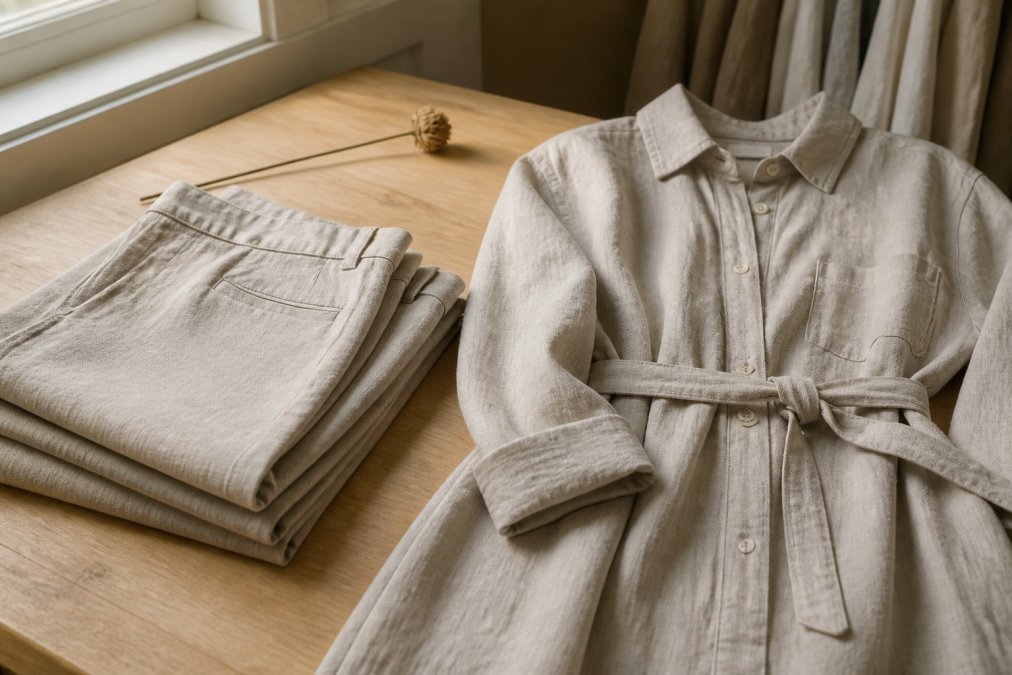
TresAdore's linen collection includes pieces designed with sensitive skin in mind. The Cotton/Linen Shirt Dress ($39.95) features a cotton-linen blend in a loose, mid-waist cut that minimizes fabric-to-skin pressure. The Women's Linen Pants ($39.95) offer a wide-leg silhouette with an elastic waist, and the Women's Cotton Linen Capri Pants ($30.99) bring a relaxed, cropped fit ideal for warmer months.


How to Care for Linen Clothing to Preserve Its Skin-Friendly Properties
The wrong care routine can introduce the very irritants that linen naturally avoids.
Washing:
- Wash in cool or lukewarm water (30°C / 86°F maximum)
- Use fragrance-free, dye-free detergent; fragrance is one of the most common contact allergens
- Avoid fabric softeners; they reduce linen's natural moisture-wicking capability
- Wash new pieces before first wear to remove residual finishing chemicals
Drying:
- Air dry where possible; high heat can stress the fiber and cause shrinkage
- If using a dryer, use low heat and remove while slightly damp
- Avoid direct prolonged sunlight for colored pieces
Frequency:
- Linen's antibacterial properties mean it doesn't need washing after every wear
- Over-washing reduces the fiber's natural protective coating faster than necessary
What to avoid:
- Chlorine bleach, which degrades flax fibers
- Enzyme-based stain removers directly on skin-contact areas if you have enzyme sensitivities
- Dry cleaning unless specified on the label
Care checklist:
- Use fragrance-free, dye-free detergent
- Wash at or below 30°C (86°F)
- Skip fabric softener
- Air dry or tumble dry on low heat
- Wash before first wear
- Avoid chlorine bleach
- Store clean and dry
Choosing Linen Pieces Worth Owning
The real difference between linen that serves sensitive skin and linen that disappoints comes down to fiber content, construction, and finishing. A piece labeled "linen" that is actually a high-polyester blend will not deliver the breathability, moisture management, or antibacterial properties described here.
What to look for:
- Fiber content: Aim for at least 50% linen content for meaningful skin benefits
- Weave construction: Plain weave is most consistent for sensitive skin. Check that seams are finished smoothly.
- Certification: OEKO-TEX Standard 100 confirms the finished piece has been tested for harmful substances
- Fit: Loose, relaxed fits reduce fabric-to-skin friction during movement
- Color: Lighter, undyed, or naturally pigmented linen carries the lowest risk of dye-related sensitivity
The first wash matters more than the first wear. Washing before wearing removes residual finishing chemicals and begins the softening process.
For anyone building a wardrobe that supports skin health, the Women's Linen Pants and Cotton/Linen Shirt Dress from TresAdore represent a considered starting point. Both feature relaxed silhouettes that minimize friction, and the cotton-linen blend offers initial softness alongside linen's superior moisture management.
As guidance from the National Eczema Association on clothing and skin care notes, fabric choice is one of the most actionable lifestyle changes for people managing chronic skin conditions, precisely because it affects the skin continuously throughout the day and night.
Sensitive skin deserves more than generic advice to "choose natural fibers." The full picture, from flax fiber structure and weave type to dye chemistry and washing practice, is what separates a fabric that genuinely supports skin health from one that simply sounds like it should. TresAdore's curated linen collection is built around pieces that meet that standard: breathable, thoughtfully constructed, and designed to become more comfortable with every wear. Explore The Collection and find the pieces your skin has been asking for.
Frequently Asked Questions
Which fabric is best for sensitive skin?
Natural fibers consistently outperform synthetics for sensitive skin. Linen ranks at the top because its flax fibers are naturally hypoallergenic, antibacterial, and highly breathable. Cotton is a close second, though it retains more moisture than linen. Fabrics to avoid include polyester, nylon, and acrylic, which trap heat, restrict airflow, and often contain textile irritants from finishing chemicals that can aggravate conditions like eczema and contact dermatitis.
Is linen naturally hypoallergenic and antimicrobial?
Yes. Linen made from flax fibers contains natural silica, which resists bacteria and fungi without chemical treatment. This makes it a genuinely hypoallergenic choice rather than a marketing claim. For people with eczema, dermatitis, or general skin sensitivity, this means less microbial buildup against the skin barrier over a full day of wear. Look for OEKO-TEX certified linen to confirm the fabric is also free of harmful finishing chemicals.
How does linen compare to cotton for those with eczema or skin sensitivities?
Both are natural fibers and far gentler than synthetics, but linen has a measurable edge for eczema-prone skin. Linen wicks moisture away from the skin faster than cotton and dries more quickly, reducing the damp conditions that can trigger flare-ups. Linen's looser weave also allows greater air permeability. Cotton softens immediately, while linen requires several wash cycles to reach peak softness, but once it does, the texture is exceptionally skin-soothing.
Does linen require special care to maintain its skin-friendly properties?
Linen is durable but benefits from gentle handling. Wash in cool or lukewarm water on a gentle cycle, and avoid harsh detergents or fabric softeners, which can leave chemical residue that irritates sensitive skin. Line drying or tumble drying on low preserves fiber integrity. Avoid high heat, which can cause shrinkage and stiffen the weave. With consistent gentle care, linen actually improves over time, becoming softer and more skin-soothing with each wash cycle.


