

Table of Contents
- What a Sustainable Capsule Wardrobe Actually Means
- Step 1: Audit Your Closet Before You Buy Anything
- Your Capsule Wardrobe Essentials List
- Sustainable Fabrics Guide: What to Choose and Why
- How to Build a Sustainable Capsule Wardrobe on a Budget: Cost Per Wear Calculation
- How to Vet Brands for Greenwashing
- Capsule Maintenance: Care, Repair, and Seasonal Rotation
- Frequently Asked Questions
Last Updated: September 2, 2026
What a Sustainable Capsule Wardrobe Actually Means
A sustainable capsule wardrobe is a curated collection of high-quality, versatile clothing pieces chosen to minimize waste, maximize wearability, and reduce your overall fashion footprint. Every item earns its place through genuine use.
At TresAdore, we believe this approach is one of the most intentional decisions a modern woman can make. The capsule system rejects fast fashion and impulse buying in favor of conscious shopping: selecting investment pieces that last seasons, not weeks. According to the Ellen MacArthur Foundation's research on the circular economy in fashion, the fashion industry generates significant textile waste, with many garments worn only a handful of times before disposal. A capsule approach directly counters this by prioritizing longevity over volume.
A well-built capsule produces more outfit formulas from fewer pieces, meaning you spend less time deciding what to wear and more time wearing things that genuinely suit you. The core principle: quality over quantity, always.
Step 1: Audit Your Closet Before You Buy Anything
The biggest mistake when building a capsule wardrobe is shopping before you audit. You almost certainly already own the foundation of your capsule.
How to Declutter Without Regret
Pull everything out of your closet and sort into three categories:
- Wear regularly, items reached for in the past three months
- Wear occasionally, items worn a few times per year for specific occasions
- Never wear, items untouched for six months or more
For each item in the third pile, ask: if I saw this in a store today, would I buy it again? If no, it leaves. Donate to a local textile recycling program or clothing exchange rather than discarding.
Defining Your Personal Style and Lifestyle Needs
Look at what remains in your "wear regularly" pile. That pile is your personal style, unfiltered. Most people find a clear pattern: a dominant color palette, consistent silhouette preference, and recurring fabric type.
Ask yourself three questions:
- Where do I actually spend my time?
- What dress codes govern my week most often?
- What do I feel most confident wearing?
The answers shape your capsule's composition. A woman who works professionally three days a week needs a different ratio of staple pieces than someone who works remotely full-time.
Your Capsule Wardrobe Essentials List
The capsule wardrobe essentials list is a framework you adapt to your life. Most well-functioning capsules share core categories that provide versatility to generate multiple outfit formulas from limited pieces.
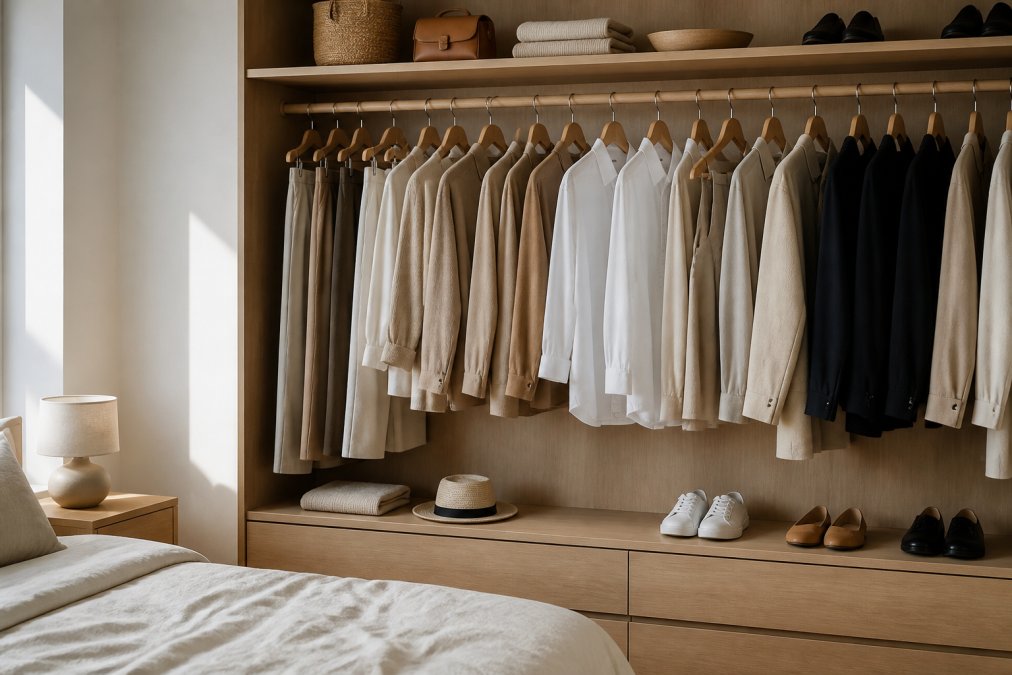
A practical capsule wardrobe essentials list typically includes:
- Tops: 2-3 classic white or neutral shirts, 1-2 fitted turtlenecks or crewnecks, 1 blouse for elevated occasions
- Bottoms: 2 pairs of well-fitted trousers (one casual, one tailored), 1 pair of dark jeans, 1 versatile skirt
- Outerwear: 1 structured blazer, 1 lightweight jacket or coat suited to your climate
- Dresses: 1-2 pieces that work across casual and semi-formal settings
- Footwear: 1 pair of clean white sneakers, 1 pair of leather or leather-look flats, 1 pair of low-heeled boots
- Accessories: 2-3 neutral bags, simple jewelry
Breathable, lightweight trousers anchor many outfit formulas. TresAdore's Women's Linen Pants, crafted from a linen and polyester blend with a relaxed wide-leg cut and elastic waist, are exactly the kind of versatile staple piece that earns its place across multiple combinations. At $39.95, the cost per wear makes them a smart investment.

Professional Capsule vs. Casual Capsule: What Changes
The structure differs primarily in fabric weight, silhouette formality, and layering options.
| Element | Professional Capsule | Casual Capsule |
|---|---|---|
| Trousers | Tailored, structured fabric | Relaxed linen or cotton blend |
| Tops | Blouses, fitted shirts | Relaxed tees, linen shirts |
| Outerwear | Blazer, trench coat | Lightweight jacket, denim jacket |
| Footwear | Block heels, leather flats | Clean sneakers, sandals |
| Color palette | Neutral tones, navy, grey | Neutrals plus earthy tones |
| Fabric priority | Wrinkle-resistant, polished | Breathable, comfortable |
Build a hybrid capsule: a core of neutral-tone pieces that move between professional and casual contexts with minor adjustments. A well-cut linen trouser pairs with a blazer for work and with a relaxed linen shirt for the weekend.
How Many Pieces You Actually Need
Most capsule frameworks suggest between 30 and 37 pieces as a functional starting point, including clothing, shoes, and outerwear but excluding underwear and workout clothes. A more useful metric is outfit formula count: can you generate at least 20 distinct outfits from your pieces? If yes, your capsule is working.
Sustainable Fabrics Guide: What to Choose and Why
Choose natural fibers and honest blends over synthetic fast-fashion materials wherever your budget allows.
Organic cotton is breathable, durable, and widely available. It washes well and holds its shape across many cycles.
Linen is one of the most sustainable fabrics available. Made from the flax plant, it requires less water than conventional cotton and becomes softer with each wash. TresAdore's Women's Cotton Linen Capri Pants use a 95%+ cotton-linen blend, delivering breathability and durability at $30.99.

Tencel (lyocell) is a wood-pulp-derived fiber produced in a closed-loop manufacturing process, meaning solvents are recycled rather than discharged. It drapes beautifully and works in both professional and casual contexts.
What to avoid: virgin polyester and nylon where alternatives exist, blended fabrics with high synthetic content that cannot be recycled, and vague terms like "eco" without certification. As documented in the Global Organic Textile Standard certification body's guidelines, certified organic textiles meet verified environmental and social criteria across the production chain.
How to Build a Sustainable Capsule Wardrobe on a Budget: Cost Per Wear Calculation
Building a sustainable capsule on a budget is not about buying cheap. It is about buying with precision. The cost per wear calculation is the framework that makes this concrete.
Cost per wear = Purchase price ÷ Number of times worn
A $120 blazer worn 60 times costs $2.00 per wear. A $30 fast-fashion top worn 4 times costs $7.50 per wear. The investment piece wins every time.
Apply this to your capsule planning:
- Set a realistic per-item budget based on category.
- Estimate honest wear frequency for each category in your life.
- Prioritize high-frequency items first: trousers, everyday tops, and footwear earn the highest wear counts.
- Track actual wear for one season to clarify your patterns.
Aim for under $3.00 per wear on all core pieces. Anything above $5.00 per wear signals either infrequent use or overspending for your lifestyle. The Sustainable Apparel Coalition's Higg Index methodology provides a useful framework for understanding the true cost of clothing production.
How to Vet Brands for Greenwashing
Greenwashing is the practice of marketing clothing as sustainable without substance to back it up. Conscious shopping requires active scrutiny rather than passive trust.
Here is a practical vetting checklist:
- Does the brand name specific certifications? Look for GOTS (Global Organic Textile Standard), OEKO-TEX Standard 100, or Fair Trade USA certification. Vague terms like "eco-friendly" without certification are red flags.
- Is the supply chain disclosed? Transparent brands name their manufacturers and often publish audit results.
- Does the brand address durability and repairability? Slow fashion brands talk about how long their products last.
- Is the pricing consistent with quality materials? Genuinely sustainable materials cost more to produce.
- What is the brand's return and end-of-life policy? Brands committed to ethical consumption often offer repair services or take-back programs.
- Does the brand respond to specific questions? Email a brand and ask where a specific garment is made.
The most common greenwashing tactic is using one sustainable attribute to imply the entire line is sustainable. Look at the full collection, not the headline piece.
Capsule Maintenance: Care, Repair, and Seasonal Rotation
A capsule wardrobe only delivers on its promise if the pieces last. Capsule maintenance is not optional.
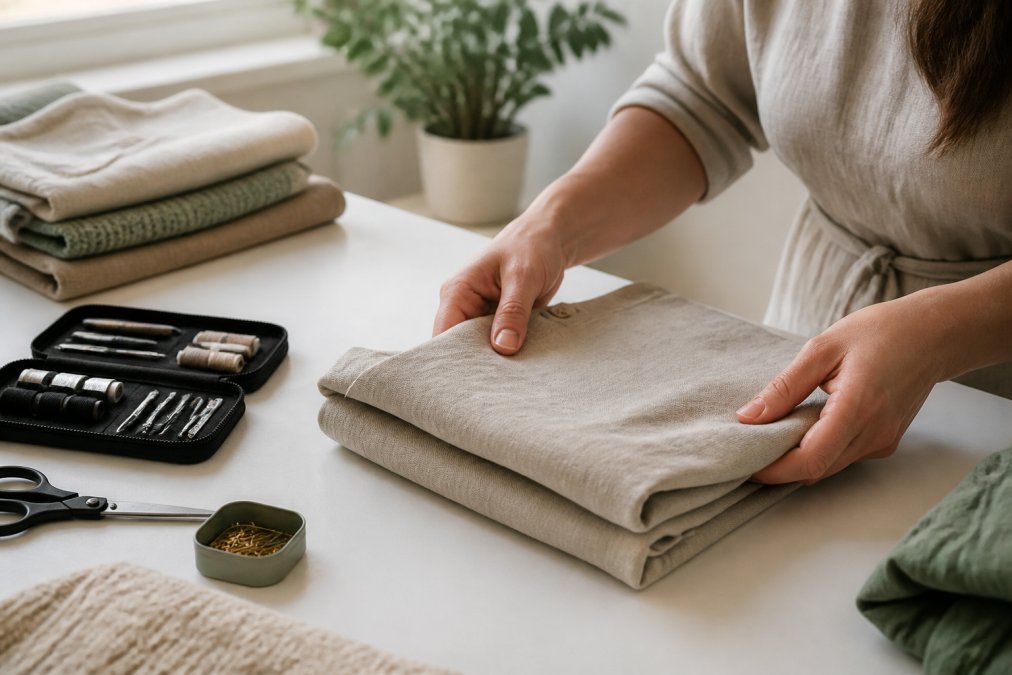
Care fundamentals:
- Wash less frequently. Most garments do not need washing after every wear.
- Wash on cold. Hot water degrades fibers faster.
- Air dry whenever possible. Tumble drying accelerates fabric wear.
- Store knitwear folded, not hung, to prevent shoulder distortion.
- Use a fabric shaver on pilling to restore appearance without replacement.
Repair before you replace. A loose button, small seam split, or broken zip does not end a garment's life. Basic hand-sewing skills extend usable life significantly. For complex repairs, many cities have specialist alterations services worth the investment.
Seasonal rotation keeps your capsule functional without overcrowding. Store off-season pieces in breathable garment bags or folded in clean cotton storage boxes. Avoid plastic bags, which trap moisture. At the start of each season, reassess whether each returning piece still earns its place.
A practical seasonal rotation schedule:
- Spring: Rotate out heavy wool and fleece; bring in linen and light cotton
- Summer: Full linen and breathable cotton rotation; store all outerwear
- Fall: Introduce layering pieces; assess summer items for wear and repair
- Winter: Full outerwear rotation; reassess the entire capsule for gaps
Building a sustainable capsule wardrobe takes more initial effort than impulse buying, but it produces a wardrobe that genuinely works for your life, reduces waste, and costs less over time. TresAdore's hand-selected collection of premium apparel is built around exactly that standard: breathable linen and cotton pieces, refined silhouettes, and quality that earns a high wear count season after season. Explore The Collection at TresAdore and start building a capsule that reflects how you actually want to live.
Frequently Asked Questions
How many items should be in a sustainable capsule wardrobe?
Most capsule systems land between 25 and 50 pieces, including tops, bottoms, outerwear, shoes, and accessories. A practical starting point is 33 items per season, a number popularized by the Project 333 method. The right count depends on your lifestyle, someone with a demanding professional schedule may need slightly more variety than someone with a flexible casual routine. Focus on versatility first: every piece should work with at least three others.
What are the best sustainable fabrics for a long-lasting wardrobe?
Organic cotton, linen, Tencel (lyocell), and recycled wool are the most reliable choices for a sustainable capsule wardrobe. Linen is especially practical for warm-weather staples, it's breathable, durable, and improves with washing. Avoid fabrics with high synthetic content when longevity is the goal, as microplastic shedding and faster pilling reduce both environmental and cost-per-wear value. Always check the fabric composition label before purchasing.
What is the 70/30 wardrobe rule for sustainable fashion?
The 70/30 rule suggests that 70% of your wardrobe should consist of timeless, versatile staple pieces, neutral tones, classic cuts, high-quality materials, while the remaining 30% reflects your personal style, seasonal trends, or statement pieces. For a sustainable capsule wardrobe, this framework helps prevent over-purchasing trend-driven items that lose relevance quickly, keeping your fashion footprint lower and your cost-per-wear higher on the pieces that matter most.
How do I transition my current closet into a sustainable capsule wardrobe?
Start with a wardrobe audit rather than a shopping trip. Pull everything out, identify what you actually wear, and donate or responsibly recycle the rest. From what remains, build your color palette around neutrals and add pieces that fill genuine gaps. Resist buying replacements all at once, a phased approach over one to two seasons is more intentional and avoids the impulse purchases that defeat the purpose of a capsule system.
This article was written using GrandRanker


