

Table of Contents
- Understanding Wellness Tech for Muscle Recovery
- How Recovery Tools Work: Red Light Therapy and Infrared Technology
- Benefits of Compression Therapy Boots and Other Passive Recovery Methods
- Best Percussion Massage Guns and Myofascial Release Devices
- How to Use Recovery Tech for Muscle Soreness: Practical Application
- Cold Therapy and Cryotherapy: Ice Baths for DOMS and Athletic Performance
- Integrating Recovery Tech with Wearable Data and Long-Term Durability
- Which Recovery Technology Should You Choose?
- Frequently Asked Questions
Last Updated: September 3, 2026
Understanding Wellness Tech for Muscle Recovery
Wellness tech for muscle recovery has transformed how athletes manage post-workout soreness and tissue repair. Rather than relying solely on ice baths and stretching, you now have access to sophisticated devices using infrared light, compression, percussion, and cold therapy to accelerate recovery at the physiological level.
Muscle recovery isn't one-size-fits-all. Delayed onset muscle soreness (DOMS) peaks 24 to 72 hours after intense exercise, driven by inflammation, metabolic waste accumulation, and microtrauma to muscle fibers (peer-reviewed research). Different recovery modalities address different parts of this process: red light therapy stimulates ATP production and blood flow, compression therapy manages swelling and lymphatic drainage, percussion massage breaks up muscle tension, and cold therapy reduces inflammation immediately post-workout.

At TresAdore, we curate premium wellness gadgets designed to integrate seamlessly into your daily recovery ritual. Our collection bridges fashion, wellness, and technology, so your recovery tools don't just work, they elevate your lifestyle. Below, we'll break down how these technologies work, which tools solve which problems, and how to choose the recovery system that matches your needs.
How Recovery Tools Work: Red Light Therapy and Infrared Technology
Red light therapy operates through photobiomodulation, where light wavelengths penetrate tissue and stimulate cellular energy production. When red light (630-700nm wavelengths) and near-infrared light (800-1000nm) reach muscle cells, they energize mitochondria to produce more ATP, accelerating muscle repair, reducing inflammation, and improving blood flow to damaged tissue (peer-reviewed research).
Infrared light penetrates deeper than visible red light alone, reaching deeper structures, tendons, ligaments, and the core of larger muscle groups. This dual-wavelength approach is why many recovery devices combine both. The therapeutic heat generated by infrared promotes vasodilation, widening blood vessels to flush out metabolic waste products like lactic acid.
TresAdore's LED red light physiotherapy panel with infrared light ($199.95) delivers this dual-wave benefit in a compact, medical-grade device for targeted treatment of specific muscle groups. For comprehensive full-body coverage, the 1444 LED infrared physiotherapy mat ($595.00) offers 180x80cm dimensions with 1,444 individual LED lights, ideal for athletes treating multiple areas or running daily recovery protocols.

The key advantage of red light therapy is that it works at the cellular level while you rest. Simply position the panel over the affected area for 10-20 minutes, and the photons do the work. This passive recovery approach fits easily into morning routines, post-workout wind-downs, or evening relaxation rituals.
Benefits of Compression Therapy Boots and Other Passive Recovery Methods
Compression therapy applies graduated pressure to limbs, forcing blood and lymphatic fluid toward the heart. This reduces swelling by preventing fluid from pooling in damaged tissue and accelerates metabolic waste removal through lymphatic drainage. The pressure gradient, tighter at the ankle, looser toward the hip, mimics the muscle pump action that occurs during exercise without requiring movement.
Athletes use compression therapy immediately after workouts when inflammation is highest. Studies in sports medicine document that compression reduces perceived muscle soreness and accelerates recovery markers when applied within the first few hours post-exercise.
Passive recovery methods differ fundamentally from active recovery like light jogging or stretching. Your body does the healing work while you rest. A single compression session might take 30-45 minutes, but during that time you can work, read, or sleep while recovery happens in the background.
The psychological benefit matters too. The ritual of using recovery tech signals to your nervous system that you're prioritizing restoration. When recovery feels like part of your training protocol rather than optional luxury, compliance improves dramatically.
Best Percussion Massage Guns and Myofascial Release Devices
Percussion therapy uses rapid, controlled vibrations to stimulate muscle tissue and break up adhesions, the tight knots and trigger points that develop after intense training. A massage gun typically delivers 1,200 to 3,200 percussions per minute, creating mechanical stimulus that increases blood flow and reduces muscle tension without requiring manual pressure from a therapist (peer-reviewed research).
The repetitive impact causes muscle fibers to relax through autogenic inhibition. When a muscle receives sustained mechanical stimulus, the nervous system signals it to stop contracting. This is why a 2-minute percussion session on a tight calf can feel like 10 minutes of manual massage.
Myofascial release devices operate similarly but often with lower frequency and different attachment heads. Where a percussion gun focuses on rapid, intense stimulation, myofascial tools might use slower oscillations to release tension in the fascia, the connective tissue surrounding muscle fibers. Both approaches accelerate recovery by improving tissue mobility and range of motion.
The best percussion devices balance power with usability. A 1,500 percussion-per-minute device is quieter and more sustainable for daily use than a 3,200 percussion-per-minute gun. Battery life matters too; a device lasting 4-6 hours supports multiple daily sessions without recharging.
How to Use Recovery Tech for Muscle Soreness: Practical Application
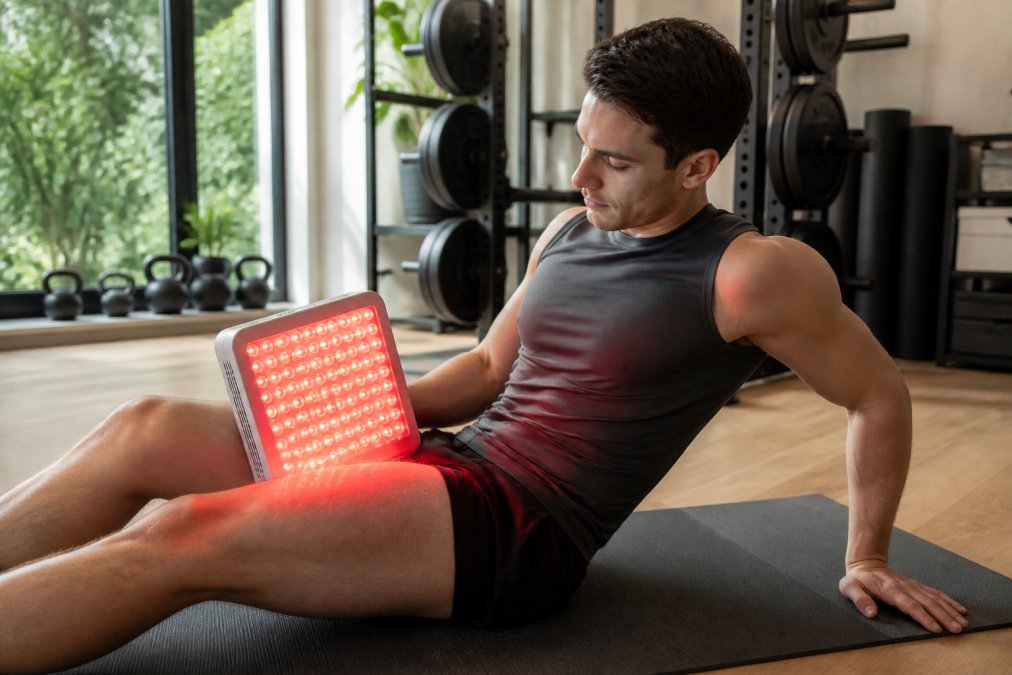
The most common mistake is treating recovery tech as a one-time intervention rather than a protocol. Effective recovery requires consistent application: typically 15-20 minutes daily for red light therapy, 2-3 times weekly for compression therapy, and 1-2 minutes per muscle group for percussion therapy.
Timing matters significantly. Cold therapy and compression are most effective in the first 2-4 hours post-workout, when inflammation is actively rising. Red light therapy works best in the evening or the day after intense training. Percussion therapy can be used anytime but works particularly well on rest days.
A practical recovery protocol: immediately after a hard workout, use an ice bath for 10-15 minutes to reduce inflammation. Six hours later, apply compression therapy for 30 minutes while working. In the evening, use red light therapy for 20 minutes on sore areas. On rest days, use a percussion device for 1-2 minutes on muscle groups showing reduced range of motion.
The key is consistency over intensity. A moderate recovery routine maintained daily outperforms sporadic aggressive interventions. TresAdore's infrared and red light therapy blanket ($999.00) combines dual-wavelength therapy with intelligent temperature control, making it easier to stick with daily sessions.

Cold Therapy and Cryotherapy: Ice Baths for DOMS and Athletic Performance
Cold exposure triggers vasoconstriction, narrowing blood vessels and reducing blood flow to inflamed tissue. This decreases swelling and accelerates resolution of DOMS. Ice baths are most effective within 0-4 hours post-exercise, when inflammation is actively rising. A typical cold water immersion lasts 10-15 minutes at temperatures between 50-59°F.
Beyond the immediate anti-inflammatory effect, regular cold exposure trains your nervous system to handle stress more effectively. The sudden physiological shock acts as a hormetic stressor. With repeated exposure, your parasympathetic nervous system strengthens, meaning you recover faster and your baseline stress resilience improves.
The psychological component is substantial. Cold water immersion requires mental toughness. The first 30 seconds are intensely uncomfortable, but if you stay calm and breathe deliberately, the discomfort plateaus. This teaches your nervous system that discomfort is temporary and manageable, a skill that transfers to training and competition.
TresAdore's foldable ice bath bucket ($298.00) removes the barrier to entry. Traditional ice baths require a bathtub; the foldable design stores flat and sets up anywhere.
Integrating Recovery Tech with Wearable Data and Long-Term Durability
Modern recovery tech becomes significantly more powerful when integrated with wearable data. A smartwatch or fitness tracker monitors heart rate variability (HRV), sleep quality, and training load, metrics that predict recovery capacity. When your HRV drops or sleep quality declines, your body is signaling that recovery is the priority. At that point, you can intensify your recovery protocol.
The integration works because wearables provide objective feedback on whether your recovery efforts are actually working. If your HRV improves after two weeks of consistent red light therapy, you have data confirming that modality is effective for you. This personalization is where recovery tech moves beyond generic recommendations into truly optimized protocols.
Long-term durability is where many recovery devices fail. When evaluating recovery tech, look for medical-grade manufacturing standards. TresAdore's LED red light physiotherapy panel carries ISO 13485 and MDSAP certifications, manufacturing standards that ensure consistent quality and durability over years of use.
Battery life and charging cycles matter too. Plug-in devices like the 1444 LED infrared physiotherapy mat eliminate charging concerns, though they sacrifice portability. The infrared therapy blanket ($999.00) uses plug-in operation as well, making it ideal for a permanent recovery space in your home.
Which Recovery Technology Should You Choose?
The right recovery tech depends on your specific bottleneck. If your primary issue is post-workout inflammation and swelling, compression therapy or cold water immersion addresses that directly. If you're dealing with chronic muscle tension and reduced range of motion, percussion therapy is more effective. If you're focused on long-term tissue health and cellular repair, red light therapy is your priority.
For most active individuals, a layered approach works best. Start with one modality that addresses your biggest pain point, use it consistently for 3-4 weeks, then measure the results. A typical progression might be: red light therapy (cellular repair) → compression therapy (swelling management) → percussion therapy (mobility and tension).
Budget considerations are real. A comprehensive recovery setup can easily exceed $1,500. If that's not feasible, prioritize based on your training intensity. Casual exercisers see the biggest ROI from red light therapy. Serious athletes benefit more from compression therapy and percussion guns. Competitive athletes often use all modalities because each addresses a different recovery pathway.
| Recovery Modality | Best For | Time Commitment | Cost Range | Primary Benefit |
|---|---|---|---|---|
| Red Light Therapy | Cellular repair, chronic pain | 15-20 min daily | $100-600 | ATP production, inflammation reduction |
| Compression Therapy | Swelling, lymphatic drainage | 30-45 min, 2-3x weekly | $300-2000 | Metabolic waste removal, DOMS reduction |
| Percussion Massage | Muscle tension, mobility | 1-2 min per area, daily | $100-400 | Range of motion, tissue relaxation |
| Cold Water Immersion | Acute inflammation, stress resilience | 10-15 min post-workout | $200-500 | Vasoconstriction, nervous system training |
| Infrared Blanket | Full-body passive recovery | 20-30 min daily | $600-1000 | Deep tissue penetration, sustained heat therapy |
The decision ultimately comes down to your lifestyle and what you'll actually use consistently. A $999 infrared therapy blanket is worthless if it sits in a closet. A $100 red light therapy wand you use every evening is far more valuable. At TresAdore, we believe recovery tech should feel intentional and integrated into your daily rhythm, not like an obligation.
The most overlooked factor is psychological sustainability. Recovery tech only works if you use it. Choose devices that fit naturally into your existing routine: red light therapy during your morning coffee, compression therapy while you work, percussion massage during your evening wind-down. When recovery feels like self-care rather than a chore, consistency follows naturally.
Recovery is where intention meets physiology. The right wellness tech for muscle recovery doesn't just accelerate tissue repair, it transforms how you approach your training and your body. TresAdore's hand-selected collection of red light therapy panels, infrared blankets, and cold therapy tools combines medical-grade effectiveness with refined design. Whether you're recovering from intense training or prioritizing long-term tissue health, our curated devices integrate seamlessly into your wellness ritual. Explore the collection and discover how intentional recovery can elevate your performance and your lifestyle.
Frequently Asked Questions
Q: What is the best wellness tech for muscle recovery?
A: The best wellness tech depends on your recovery goals and budget. Red light therapy panels like the LED red light physiotherapy panel ($199.95) work well for inflammation reduction and tissue repair. For full-body treatment, the 1444 LED infrared mat ($595.00) offers high-density coverage. Ice baths address delayed onset muscle soreness (DOMS) through vasoconstriction and metabolic waste removal. Percussion massage guns provide myofascial release for muscle tension. Most athletes benefit from combining multiple modalities, red light therapy for deep tissue healing, compression for blood flow, and active recovery tools for flexibility.
Q: How do percussion massage guns compare to compression therapy boots?
A: Percussion massage guns deliver targeted trigger point therapy through rapid vibration, breaking up muscle tension and improving local blood flow circulation. They're ideal for acute soreness in specific areas and offer active recovery benefits. Compression therapy boots use sustained pressure to enhance lymphatic drainage and reduce inflammation throughout the leg, making them better for systemic recovery after intense workouts. Percussion tools work faster (5-10 minutes) but require effort; compression boots are passive and can be worn during recovery rituals. For complete muscle recovery, many athletes use both: percussion for problem areas, compression for overall physiological adaptation.
Q: Is wellness tech worth the investment for casual athletes?
A: Yes, if you experience regular muscle soreness or want to accelerate recovery between workouts. Entry-level options like the Portable Red Light Therapy Wand ($99.95) or Foldable Ice Bath Bucket ($298.00) deliver measurable benefits without premium pricing. Casual athletes benefit most from tools that fit their routine, portable devices for consistency, passive tools like ice baths for convenience. Research shows that structured recovery protocols using even one modality improve range of motion, reduce inflammation, and enhance next-session performance. The psychological benefit of intentional recovery rituals also matters: regular cold exposure builds stress resilience and trains your nervous system's response to physical demands.
Q: How does red light therapy reduce muscle soreness and inflammation?
A: Red light wavelengths (typically 600-700nm) penetrate tissue and stimulate mitochondrial function, increasing ATP production and cellular energy. This accelerates tissue repair and reduces inflammatory markers associated with DOMS. Infrared light (700-1100nm) penetrates deeper, generating therapeutic heat that increases vasodilation and blood flow circulation to affected areas. Combined red and infrared therapy, like the Infrared and Red Light Therapy Blanket ($999.00), addresses both surface inflammation and deep muscle fatigue. The effect is cumulative: regular sessions enhance physiological adaptation and speed metabolic waste removal, which is why athletes using red light therapy report faster recovery and improved athletic performance over weeks.
This article was written using GrandRanker

