

Table of Contents
- Best Wearable Stress Relief Devices for Anxiety in 2026: Quick Comparison
- Portable Red Light Therapy Wand: Photobiomodulation for Stress and Focus
- Bluetooth Sleep Mask: Audio-Based Wind-Down for Anxious Nights
- Wearable Biofeedback Devices for Stress: What Actually Works
- How to Stack Smart Rings with Jewelry for a Seamless Look
- Best Practices for Using Wellness Tech: Habits That Stick
- Which Wearable Stress Relief Device Should You Pick?
- Conclusion: Building Your Calm Toolkit
- Frequently Asked Questions
Last Updated: October 2, 2026
Best Wearable Stress Relief Devices for Anxiety in 2026: Quick Comparison
The best wearable stress relief devices for anxiety in 2026 are the ones you'll actually keep using past week two.
Here's what most guides get wrong: they rank devices by feature count instead of by whether the habit sticks.
This guide covers the best wearable stress relief devices for anxiety in 2026 across four categories: light therapy, audio-based wind-down, biofeedback, and sensory relief.
Quick Picks:
- Best for focus and calm: Portable Red Light Therapy Wand ($99.95)
- Best for anxious nights: Bluetooth Sleep Mask with Stereo Sound ($34.95)
- Best for muscle tension: Electric Head Scalp Massager ($29.95)
- Best for daily stress support: Natural Dietary Capsules with Ashwagandha ($39.95)
| Device | Price | Type | Best For | Session Length |
|---|---|---|---|---|
| Red Light Therapy Wand | $99.95 | Light therapy | Focus, cognitive calm | 5-10 min |
| Bluetooth Sleep Mask | $34.95 | Audio | Nighttime wind-down | 20-45 min |
| Electric Scalp Massager | $29.95 | Sensory | Tension headaches | 10-15 min |
| Stress Relief Capsules | $39.95 | Supplement | Daily baseline calm | Daily dose |
| Saffron Mood Capsules | $34.95 | Supplement | Mood support | Daily dose |
Portable Red Light Therapy Wand: Photobiomodulation for Stress and Focus
Photobiomodulation is the use of specific light wavelengths to stimulate cellular activity, and it's the mechanism behind the red light wand's calming effect.

The 850nm wavelength reaches deeper tissue, which is why this device gets used for both skin and body treatment.
The wand measures 125mm by 25mm and weighs 375g, so it fits in a bag pocket. It ships with two rechargeable 2200mAh batteries, protective goggles, and an EVA case.
The honest limitation: this is a cue, not a cure. What it does well is give your nervous system a scheduled, low-effort reset.
NIH overview of photobiomodulation research
Bluetooth Sleep Mask: Audio-Based Wind-Down for Anxious Nights
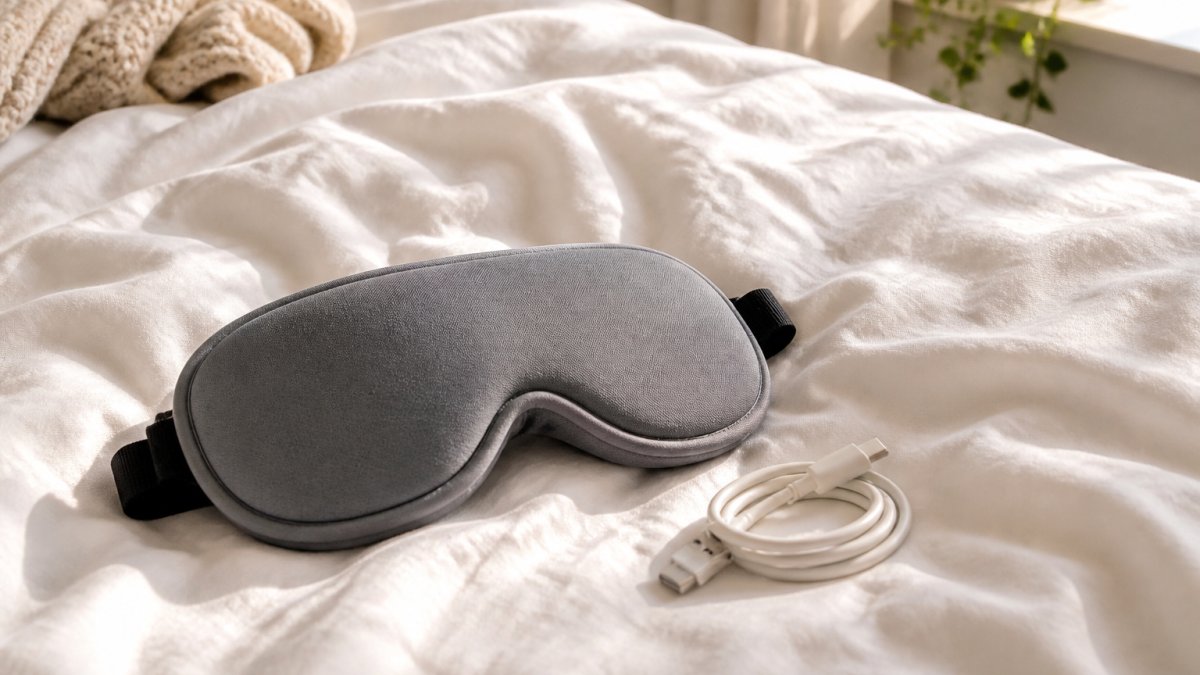
Audio-based wind-down works because sound gives an anxious brain something to track other than its own thoughts. The Comf Bluetooth Sleep Mask pairs binaural stereo sound with memory foam and full light blocking, which matters more than most buyers realize.

Light exposure at night suppresses melatonin, the hormone that signals sleep onset.
The specs are practical: Bluetooth 5.2, up to 10 hours of playback at medium volume, 72 hours standby, and a 1-2 hour charge time via USB-C.
Where it falls short: side sleepers may feel the speaker pads after an hour. If you sleep on your stomach, this device is a poor fit.
Wearable Biofeedback Devices for Stress: What Actually Works
Wearable biofeedback devices for stress work by measuring a body signal, then feeding it back to you in real time so you can change it.
Heart rate variability (HRV) measures the millisecond gaps between heartbeats. A healthy nervous system produces uneven gaps; a stressed one produces a metronome.
The mechanism that makes either signal useful is called operant conditioning, and it is the same principle behind haptic feedback: your body learns a new default through repetition, not through willpower.
The habit-formation layer competitors skip
Most guides stop at the mechanism. The part that decides whether a biofeedback device survives past week two is the cue-routine-reward loop, and wearables fail this loop in predictable ways.
- Cue: the device must fire at a moment you can actually respond. A haptic nudge during a client call is noise. The same nudge during a keyboard pause is actionable.
- Routine: the response must take under 60 seconds. Anything longer gets postponed and then abandoned.
- Reward: the feedback must be visible. A silent correction teaches nothing; a subtle vibration that stops when your breathing settles teaches the nervous system what worked.
Pairing a wearable with your desk setup
A biofeedback cue has nowhere to land if your workstation is fighting you. Three adjustments make the cue actionable:
- Monitor height: the top third of the screen should sit at or just below eye level. If you are looking down, every posture cue is a correction against your own furniture.
- Chair depth: two to three fingers of space between the back of your knee and the seat edge. Closer than that and you will slump to relieve pressure.
- Elbow angle: roughly 90 degrees, forearms parallel to the floor. If your elbows float, your shoulders will creep up and trip every tension alert.
For desk workers, the practical stack looks like this:
- A wearable that cues posture or breathing during work hours
- A five-minute active reset between meetings
- An ergonomic workstation adjustment so the cue has somewhere to land
NIH overview of heart rate variability and stress research
Portable Red Light Therapy Wand for ADHD via Photobiomodulation, Stress Relief →
How to Stack Smart Rings with Jewelry for a Seamless Look
Stacking a smart ring with jewelry comes down to three rules: match metal tones, vary band widths, and give the ring its own finger when the stack gets crowded.
Start with metal. If your smart ring is matte black or titanium, pair it with silver, white gold, or brushed steel.
Width matters more than most people expect.
For desk ergonomics, keep the tracker hand free of dangling charms. Anything that catches on a keyboard or mouse will get removed by week three.
Best Practices for Using Wellness Tech: Habits That Stick
Best practices for using wellness tech start with one rule: attach the device to a habit you already have. A sleep mask works because it lives on your nightstand. A wand works because it lives in your bag.
Set a session cap. Five to ten minutes for light therapy, ten to fifteen for a scalp massager, and a fixed dose for any supplement. Longer isn't better, and overuse is how people quit.
Track the outcome, not the usage. Ask whether you slept better, not whether you remembered to charge the device.
- Charge everything on the same day each week
- Keep devices visible, not in drawers
- Pair each device with an existing routine trigger
- Drop anything you haven't touched in 30 days
CDC guidance on sleep and light exposure
Which Wearable Stress Relief Device Should You Pick?
Pick based on your worst symptom, not your most interesting one. If nights are the problem, start with the sleep mask. If focus and daytime overwhelm are the issue, the red light wand earns its place.
For tension that lives in your shoulders and scalp, the Electric Head Scalp Massager offers three intensity levels and kneading action for $29.95. It's the lowest-commitment entry point in this category.
If you want a baseline rather than a session, the Natural Dietary Capsules combine ashwagandha, magnesium, and arginine for daily stress and heart support at $39.95. The Saffron Capsules at $34.95 take a similar daily approach with a vegan formula.

Conclusion: Building Your Calm Toolkit
Anxiety rarely responds to a single device. The better approach is a small toolkit: one device for nights, one for focus, and one daily habit that doesn't depend on hardware.
TresAdore curates exactly that kind of collection, pairing wellness technology with pieces you'll actually want on your nightstand and your hand.
Explore The Collection and build a calm toolkit that fits your routine, not the other way around.
Frequently Asked Questions
Do wearable stress relief devices actually reduce anxiety?
Research on wearable stress relief devices shows mixed but promising results. Devices using biofeedback, haptic feedback, or photobiomodulation can help regulate the nervous system and reduce acute stress responses. However, they work best as part of a broader routine that includes sleep hygiene, movement, and stress management practices. The best wearable stress relief devices for anxiety in 2026 focus on giving you real-time cues to breathe, relax, or refocus rather than promising a cure.
How do biofeedback wearables help with stress management?
Wearable biofeedback devices for stress track physiological signals like heart rate variability, skin conductance, or breathing patterns. When your body shows signs of stress, the device alerts you through haptic feedback or an app notification, prompting you to take a breath or adjust your posture. Over time, this builds postural awareness and muscle memory for calming responses. The key is consistency: using the device daily helps you recognize stress earlier and respond before it escalates.
What features should I look for in an anxiety-relief wearable?
Prioritize comfort, battery life, and the type of feedback the device provides. Haptic feedback devices help calm the nervous system through gentle vibrations. Audio-based options like a Bluetooth sleep mask support relaxation and sleep. Light therapy devices offer photobiomodulation for stress and focus. Also check for adjustable intensity, app integration, and whether the device fits your daily routine.
Can smart jewelry help with stress and anxiety?
Smart jewelry can help with stress and anxiety by making wearable tech feel less clinical and more personal. When you know how to stack smart rings with jewelry, you can wear a biofeedback ring alongside your favorite bands without it looking like a medical device. This increases the likelihood you will wear it daily, which matters because consistency drives results. The psychological habit formation aspect is often overlooked: if you enjoy wearing it, you will use it more.
Are there FDA-cleared wearable devices for anxiety?
Some wearable devices have received FDA clearance for specific uses, such as vagus nerve stimulation for certain conditions. However, most consumer wearable stress relief devices are marketed as wellness tools, not medical treatments. If you are looking for a device to treat a diagnosed anxiety disorder, consult a healthcare provider. For everyday stress management, devices like the Portable Red Light Therapy Wand or a Bluetooth sleep mask can support relaxation without claiming to replace medical care.


