

Table of Contents
- What Counts as Premium Wellness Technology in 2026
- Red Light Therapy Devices Compared: Prices and Specs
- The Benefits of Red Light Therapy at Home
- Modern Wellness Gadgets for Home Use Beyond Light Therapy
- How to Build a Home Wellness Sanctuary
- Safety, Certifications, and Who Should Skip These Devices
- Maintenance and Long-Term Value of Premium Wellness Technology
- Frequently Asked Questions
Last Updated: September 15, 2026
What Counts as Premium Wellness Technology in 2026
Premium wellness technology is the category of home-use devices built around clinical-grade components, measurable outcomes, and materials that hold up to daily use. It includes red light therapy panels and blankets, infrared saunas, recovery tools, sleep devices, and smart trackers, all sold direct to consumers rather than through clinics.

That definition matters because the label gets applied to a lot of inexpensive gadgets that do not deserve it. At TresAdore, we separate the category into three tiers: entry-level novelty devices, mid-tier home systems, and professional-grade equipment that mirrors what practitioners use. Only the third tier earns the word premium.
The difference usually comes down to four things: wavelength precision, power output, certification, and build quality. When you buy premium wellness technology online, you are paying for all four at once.
FDA guidance on red light therapy device regulation
Red Light Therapy Devices Compared: Prices and Specs
Red light therapy prices range from under $100 for a targeted wand to roughly $1,000 for a full-body blanket (pubmed.ncbi.nlm.nih.gov). The table below covers the current TresAdore lineup so you can match a device to a specific goal rather than guessing.
| Device | Price | Best For | Key Spec |
|---|---|---|---|
| Infrared and Red Light Therapy Blanket | $999.00 | Full-body pain relief | 660nm + 850nm, 5 heat settings |
| 1444 LED Physiotherapy Mat | $595.00 | Full-body coverage | 1,444 LEDs, 180 x 80 cm |
| LED Physiotherapy Panel | $199.95 | Targeted muscle pain | |
| Infrared LED Beauty Mask | $219.95 | Facial skin rejuvenation | 4 intensity levels |
| Laser Hair Growth Cap | $159.95 | Hair thinning | 650nm, 80 or 272 beads |
| InfraRed Neck Therapy Device | $143.99 | Neck lines and elasticity | Photon therapy |
| Red Light Therapy Device | $99.95 | Neck and wrist | 660nm + 850nm, 4 modes |
| Portable Therapy Wand | $99.95 | Travel and focus support | |
| Infrared Rhinitis Device | $34.99 | Nasal comfort |
The blanket and the mat are the two workhorses. Everything else solves a narrower problem.

The Benefits of Red Light Therapy at Home
The main benefits of red light therapy at home are skin rejuvenation, muscle soreness relief, and faster recovery after training. Red and near-infrared wavelengths penetrate tissue and support cellular energy production (Mechanisms and applications of the anti-inflammatory effects of photobiomodulation).
What most guides miss is that consistency beats intensity. The devices that actually get used are the ones that fit your routine: a panel beside your desk, a blanket on the couch, a wand in a carry-on.
If you have tried wellness gadgets before and abandoned them, the problem was almost certainly friction, not the technology.
Modern Wellness Gadgets for Home Use Beyond Light Therapy
Modern wellness gadgets for home use now cover cold exposure, sleep, and tracking alongside light therapy. The Foldable Ice Bath Bucket ($298.00) is the clearest example: cold water immersion narrows blood vessels to reduce swelling, then restores blood flow to clear metabolic waste.

The rest of the category breaks down into three jobs:
- Recovery: ice baths, compression, and infrared heat
- Sleep: blackout and cooling systems, plus consistent sleep hygiene
- Tracking: wearables that log heart rate variability, sleep stages, and activity
A common mistake is buying all three at once. Start with the one problem you actually have.
How to Build a Home Wellness Sanctuary
Building a home wellness sanctuary starts with one corner, not one room. Pick a spot you pass daily, add a single device, and let the routine form before you add anything else.
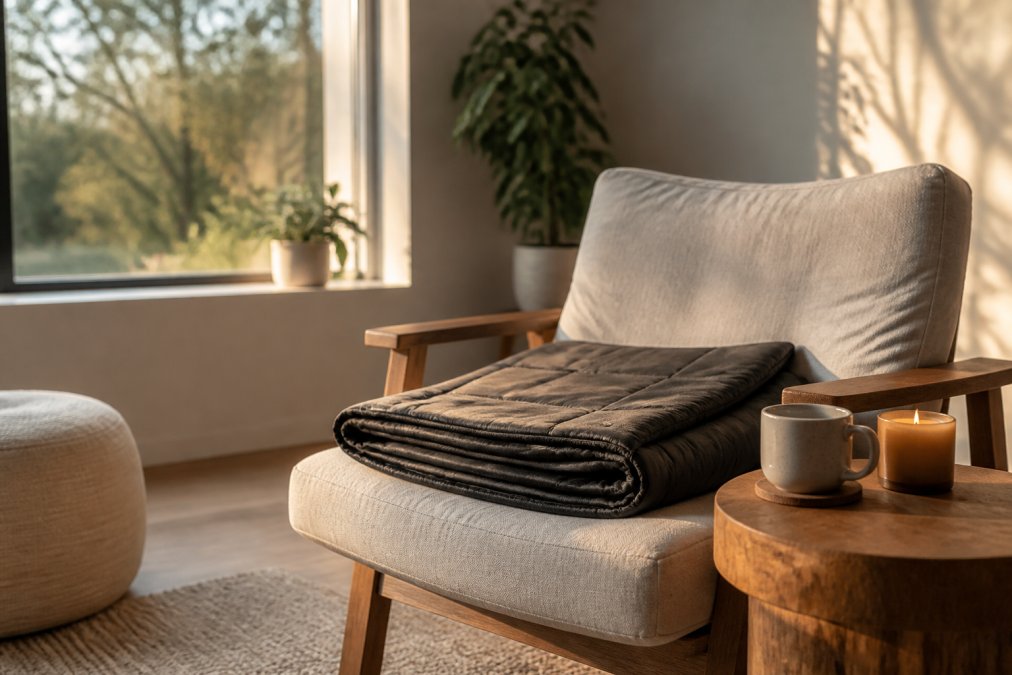
Start With the Room, Not the Device
Before you buy anything, audit the space against four physical constraints:
- Floor space: a full-body red light blanket needs roughly the footprint of a yoga mat plus clearance to lie flat; a 1,444-LED mat at 180 x 80 cm needs a hard, flat surface, not carpet.
- Power: most panels and blankets draw under 300W, but an ice bath chiller or infrared sauna can pull 1,500W or more. Check the circuit before you commit, a shared bedroom circuit will trip.
- Ventilation: infrared saunas and ice bath chillers both need airflow. A sealed closet is the wrong room.
- Light control: red light therapy works best in a dim room so ambient light does not compete with the wavelengths. Blackout curtains do more for a session than a brighter panel.
Layer the Space in This Order
- Light: a panel or blanket for 15-20 minutes in the evening.
- Temperature: an ice bath bucket for post-training sessions. Keep a towel and a timer within arm's reach.
- Sound and scent: low lighting and quiet to signal wind-down. A white noise source or a small speaker.
- Storage: a basket or cabinet so the devices disappear when not in use.
The last step matters more than it sounds. Equipment left in the open becomes clutter, and clutter kills the habit.
The Ecosystem Question Most Guides Skip
A sanctuary is not a pile of devices, it is a set of devices that talk to each other or to the same app.
- App compatibility: does the device sync with Apple Health, Google Fit, or a dedicated app? A sleep tracker that does not feed data into the same dashboard as your recovery tools is a standalone gadget, not part of a system.
- Smart home integration: panels and saunas with smart plugs or Matter-compatible controllers can be scheduled alongside lighting scenes. This is the single biggest adherence upgrade you can make.
- Data continuity: if you track HRV on a wearable and recovery on a separate app, you will stop looking at both within a month. Pick one primary dashboard and force every device into it.
A Realistic First-Corner Budget
You do not need to build the whole sanctuary at once. A common pattern is to start with one light therapy device, add temperature therapy three to six months later once the light routine is locked in, and only then layer tracking.
Safety, Certifications, and Who Should Skip These Devices
Safety certifications are the fastest way to separate real equipment from rebranded imports. But "FDA cleared" and "ISO 13485" get thrown around loosely.
What the Certifications Actually Mean
- FDA clearance (510(k)): the device has been reviewed as substantially equivalent to a legally marketed predicate device for a specific intended use. It is not the same as FDA approval, which applies to higher-risk categories like implants and drugs. A red light panel marketed for "pain relief" may be cleared; the same panel marketed for "skin cancer treatment" is not.
- FDA registration: the manufacturer has registered its establishment and listed the device. This is a paperwork requirement, not a safety endorsement. Many sellers blur this into "FDA approved," which no red light device is.
- ISO 13485: a quality management standard for medical device manufacturing. It tells you the factory has documented processes, it does not tell you the device works.
- Electrical safety marks (UL, ETL): relevant for anything that plugs in, especially saunas and ice bath chillers that draw high wattage.
How to Verify Before You Buy
Who Should Skip Which Technology
The Rule That Covers Everything
Maintenance and Long-Term Value of Premium Wellness Technology
Frequently Asked Questions
What defines premium wellness technology?
Premium wellness technology is defined less by price and more by verified specifications: stated wavelengths (such as 660nm red and 850nm infrared), documented certifications like ISO 13485 manufacturing or FDA clearance, adjustable intensity settings, and durable materials. A device that publishes its LED count, wavelength range, and power rating is easier to evaluate than one that only promises results. Build quality, warranty support, and clear usage instructions also separate premium tools from disposable gadgets.
Are high-end wellness devices worth the investment?
It depends on how often you will use them. A $999 red light therapy blanket used four times a week, while a $99.95 device that sits in a drawer is money wasted. Look at cost per use, not sticker price. Devices with adjustable settings, dual wavelengths, and portable designs tend to get used more, which is what actually determines whether the investment pays off over time.
What are the benefits of red light therapy at home?
At-home red light therapy delivers consistent, convenient sessions without appointments. Devices like the Infrared LED Beauty Mask ($219.95) target facial concerns such as acne and fine lines, while the 1444 LED Infrared Physiotherapy Mat ($595.00) covers the full body. Consistency matters most, and having the device at home makes that routine easier to keep.
How do I choose the right wellness gadgets for my home?
Start with the outcome you want, then match the device. For muscle recovery, look at coverage area and wavelength depth; for skin, check intensity levels and fit. Confirm the power supply works with US outlets, read the return policy, and check certifications. Buy one device, use it for a month, then add the next. Building a home wellness sanctuary works best as a gradual process rather than a single large purchase.
The challenge with buying wellness equipment is that most of it is sold on promises rather than specifications, and the cheap options rarely survive a year of use. TresAdore curates the category so you can skip that trial and error: a hand-selected collection that bridges fashion, wellness, and technology, with devices chosen for certified components, real power output, and a place in an actual routine. Explore the collection and find the piece that fits yours.


