

Table of Contents
- Why Cleaning Red Light Therapy Panels Matters
- Red Light Therapy Panel Safety Precautions Before You Start
- Best Cleaning Supplies for Light Therapy Devices
- Step-by-Step Process for Cleaning Red Light Therapy Panels
- How Often to Clean Red Light Therapy Equipment
- Material-Specific Care and Compatibility
- Troubleshooting Residue Buildup and Performance Issues
- Storage and Long-Term Device Maintenance
- Frequently Asked Questions
Last Updated: September 19, 2026
Why Cleaning Red Light Therapy Panels Matters
Clean red light therapy panels deliver powerful benefits for skin rejuvenation and muscle recovery. But here's what most users miss: dirty panels don't work as well. Dust, skin oils, and sweat residue block light wavelengths from reaching your skin effectively. Over time, this buildup reduces the device's therapeutic output significantly.

Think of it like a dirty car windshield. Light still passes through, but the clarity drops. Your red light therapy panel works the same way. Regular cleaning keeps your device performing at peak efficiency and extends its lifespan.
This guide walks you through exactly how to maintain clean red light therapy panels so they deliver the results you're investing in.
Red Light Therapy Panel Safety Precautions Before You Start
Before touching your device, power it down completely. Unplug it from the wall outlet and let it cool for at least 15 minutes. Red light therapy panels generate heat during use, and working on a warm device risks burns.

Never work on an active or recently used panel. The LED elements and infrared components are delicate. Heat makes them more vulnerable to damage from cleaning pressure or moisture.
Check your user manual for device-specific warnings. Different manufacturers recommend different approaches. Some panels have protective coatings that require special care. Others have sealed components where moisture ingress poses electrical safety risks. Follow those guidelines exactly.
Wear clean hands or lightweight gloves while cleaning. This prevents transferring new oils or bacteria onto the surface. Keep your workspace dry and organized. Spilled liquids near electrical equipment create hazards.
Best Cleaning Supplies for Light Therapy Devices
You need just a few items to clean your red light therapy panels properly. Start with isopropyl alcohol at 70% concentration (the CDC). This is the gold standard for electronics cleaning. It evaporates quickly and leaves no residue.
Grab a lint-free microfiber cloth. Regular paper towels shed fibers that stick to the panel surface. Microfiber cloths grab dust and oils without leaving behind lint or scratches.
Have distilled water on hand. Tap water contains minerals that leave spots on LED surfaces. Use it only for final rinses if needed. Most cleaning jobs need only isopropyl alcohol.
A soft-bristled brush helps with stubborn dust in corners or between LED elements. Use one with natural bristles, never synthetic.
Keep these supplies together in a dedicated cleaning kit. Store them in a cool, dry place away from direct sunlight. Isopropyl alcohol evaporates over time, so seal containers tightly.
What to Avoid: Harsh Chemicals and Abrasive Materials
Never use bleach, acetone, or harsh solvents. These damage protective coatings and can corrode metal components. They also leave chemical residue that interferes with light transmission.
Skip fragrance-based cleaners entirely. Scented products contain oils and additives that coat the panel surface. They reduce light output and create buildup over time.
Avoid abrasive materials like paper towels, scouring pads, or rough cloths. These scratch the LED surface and protective layers. Even small scratches compromise the device's surface integrity and can trap moisture.
Don't soak your panel in any liquid. Submersion risks water damage to internal electrical components. Even if the panel appears waterproof externally, moisture can seep into sealed areas and cause failures.
Never use compressed air directly on LED elements. The pressure can dislodge delicate components or force dust deeper into crevices where it's harder to remove.
Step-by-Step Process for Cleaning Red Light Therapy Panels
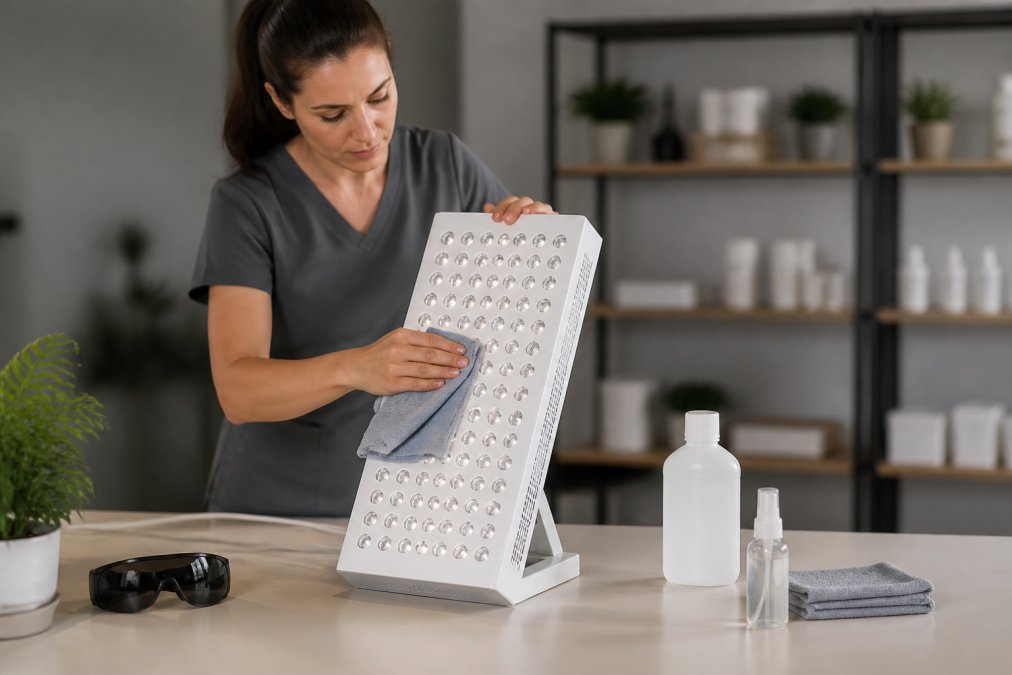
Step 1: Power Down and Cool Your Device
Turn off your red light therapy panel at the power switch. Unplug the power adapter from the wall outlet. This eliminates electrical safety risks entirely.
Wait at least 15 minutes before touching the device. LED panels retain heat even after shutdown. Touching a hot surface risks burns. Cleaning a warm panel also causes streaking because isopropyl alcohol evaporates too quickly on heated surfaces.
Check that the power indicator light is off. Some devices have standby modes that keep components active. Verify complete shutdown before proceeding.
Step 2: Remove Surface Dust and Debris
Use your lint-free microfiber cloth to wipe away loose dust. Apply light pressure only. You're not scrubbing yet, just removing surface particles.
Work in one direction across the panel. This prevents pushing dust around and keeps it from settling back onto the surface. Pay special attention to corners and edges where dust accumulates.
LED red light physiotherapy panel with →
For stubborn dust in crevices between LED elements, use your soft-bristled brush. Brush gently away from the center of the panel to avoid pushing debris into gaps.
Step 3: Clean LED Panels with Isopropyl Alcohol
Dampen your microfiber cloth with isopropyl alcohol. Don't oversaturate it. The cloth should be damp, not dripping wet. Excess liquid risks moisture ingress into electrical components.
Wipe the entire panel surface with gentle, circular motions. Work systematically from top to bottom. This ensures even coverage and prevents missing spots.
Focus extra attention on areas that contact your skin regularly. Skin oils and sweat residue concentrate in these zones. These deposits block light wavelengths more than dust alone.
Let the isopropyl alcohol evaporate naturally. Don't wipe it dry with another cloth. The alcohol evaporates completely within 2-3 minutes and leaves no residue behind.
Step 4: Address Residue Buildup and Skin Oils
If you notice stubborn residue after the initial alcohol cleaning, repeat the process. Sometimes buildup requires a second pass. This is normal with devices used frequently.
For heavy residue, let the isopropyl alcohol sit on the cloth for 30 seconds before wiping. The extra contact time helps break down oils and sweat. Then wipe gently in circular motions.
Never scrub hard or apply pressure trying to force residue off. Gentle, patient cleaning works better than aggressive scrubbing. Aggressive pressure risks scratching the protective coating.
After cleaning, inspect the panel under good lighting. You should see the LED elements clearly without cloudy spots or film. If spots remain, repeat this step once more.
Step 5: Dry and Verify Surface Integrity
After isopropyl alcohol cleaning, the panel dries on its own within minutes. You don't need to dry it manually. In fact, adding another cloth introduces unnecessary friction.
Once dry, inspect the surface carefully. Look for any scratches, cracks, or damage to the protective coating. Check that all LED elements appear intact and evenly spaced.
Plug the device back in and power it on briefly. The panel should light up uniformly. If you notice dark spots, uneven brightness, or areas that don't light, this indicates internal damage or moisture. Contact the manufacturer if this occurs.
How Often to Clean Red Light Therapy Equipment
Clean your red light therapy panels monthly as a baseline. This prevents buildup and keeps the device performing optimally. Monthly cleaning takes just 5-10 minutes.
Increase frequency if you use the device daily or apply it directly to your skin. Daily users should clean every 2-3 weeks. Frequent skin contact transfers more oils and sweat to the surface.
If you use your panel in dusty environments, clean more often.
Material-Specific Care and Compatibility
Red light therapy panels use different materials for their protective layers and frames. Understanding your device's materials helps you clean safely and effectively.
| Material | Safe Cleaners | Avoid | Notes |
|---|---|---|---|
| Tempered Glass | Isopropyl alcohol, microfiber cloth | Acetone, abrasive pads | Most durable option |
| Acrylic | Isopropyl alcohol, soft cloth | Harsh solvents, scouring pads | Scratches more easily than glass |
| Aluminum Frame | Isopropyl alcohol | Bleach, harsh chemicals | Responds well to gentle cleaning |
| Stainless Steel | Isopropyl alcohol | Abrasive materials | Maintains appearance with regular care |
Troubleshooting Residue Buildup and Performance Issues
If your panel shows persistent cloudy spots after cleaning, you're likely dealing with mineral deposits from tap water or dried cleaning solution. Switch to distilled water for final rinses. Repeat the cleaning process using only isopropyl alcohol and distilled water.
Storage and Long-Term Device Maintenance
Store your red light therapy panel in a cool, dry location away from direct sunlight. UV exposure degrades protective coatings over time. A closet, cabinet, or drawer works well for storage.
Frequently Asked Questions
How often should I clean my red light therapy device?
Clean your red light therapy panels every 1-2 weeks with regular use, or whenever you notice dust accumulation or skin oil residue on the surface. High-use devices may need weekly cleaning to maintain optimal light output and prevent moisture ingress. Always check your user manual for device-specific recommendations, as cleaning frequency depends on your environment and usage patterns.
What cleaning agents are safe for LED light panels?
Isopropyl alcohol (70% concentration) and fragrance-free, lint-free microfiber cloths are the safest options for cleaning red light therapy panels. Avoid harsh chemicals, abrasive materials, and excessive water that can damage the protective coating and cause electrical safety issues. Never use soap, detergents, or household cleaners that may leave residue or corrode the device components.
Can I use water to clean my red light therapy panel?
Use only a damp cloth with minimal moisture, never submersion or direct water spray. Excess water can cause moisture ingress into electrical components and compromise the device's integrity. If you must use water, dampen the cloth first, wring out excess liquid thoroughly, and dry the panel immediately with a lint-free cloth to prevent damage.
How do I know if my red light therapy panel needs cleaning?
Signs your device needs cleaning include visible dust on the LED panels, reduced light output or dimmer appearance, visible skin oil or sweat residue, and dust accumulation around vents or edges. Post-cleaning verification involves checking that the light appears bright and uniform across the entire panel surface. A clean device delivers consistent red light wavelengths for optimal skin rejuvenation and muscle recovery results.


