

Table of Contents
- What Makes Expensive Jewelry Different from Costume Jewelry
- Material Quality and Precious Metal Purity
- Craftsmanship and Design Philosophy in Fine Jewelry
- How to Value Jewelry: Beyond the Price Tag
- Fine Jewelry as an Investment Guide
- Luxury Jewelry Resale Value and Liquidity
- Long-Term Costs: Maintenance, Insurance, and Durability
- Is Expensive Jewelry Worth the Investment for You
- Frequently Asked Questions
Last Updated: September 20, 2026
What Makes Expensive Jewelry Different from Costume Jewelry
Fine jewelry offers intrinsic material value, precision craftsmanship, and multi-generational durability, while costume jewelry uses base metals, glass, and synthetic stones designed for short-term wear.
According to the Gemological Institute of America's jewelry standards, fine jewelry is defined by its use of precious metals like gold, silver, and platinum, combined with genuine gemstones. These materials retain value because they're finite resources with consistent market demand. A costume piece might look identical on the surface, but underneath, the construction differs fundamentally. Fine jewelry features solid metal construction or quality plating over substantial bases, while costume jewelry often uses thin metal with hollow cores that deteriorate quickly.
Fine jewelry makers spend years mastering techniques costume manufacturers don't employ, enabling pieces to be repaired, resized, and restored across decades. Costume pieces, once damaged, are typically discarded.
Material Quality and Precious Metal Purity
Fine jewelry standards: 18K (75% gold) and 14K (58.3% gold) balance durability with precious metal content; sterling silver must be 92.5% pure; platinum is the rarest and most durable, maintaining appearance indefinitely.
Alloy choices affect longevity and aging: white gold uses nickel or palladium; rose gold combines copper. These decisions determine whether the piece develops patina or maintains its original finish.
Costume jewelry typically uses brass, copper, or zinc alloy bases with thin gold plating. The plating wears away with regular wear, sometimes within months. Once exposed, the base metal underneath tarnishes, discolors, and can cause skin reactions. This is the core reason expensive jewelry costs more: the materials themselves are inherently valuable and durable.
Craftsmanship and Design Philosophy in Fine Jewelry
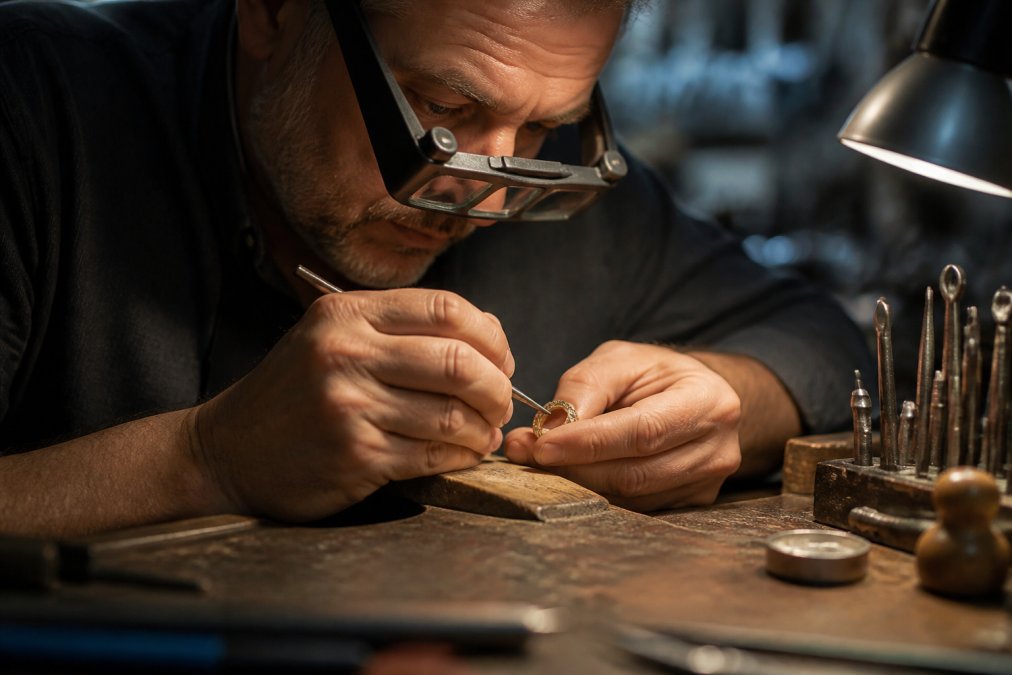
Fine jewelry designers consider how pieces will age, be worn daily, and be repaired decades from now, a forward-thinking approach that directly impacts value.
Stone setting and soldering precious metals require years of practice to master, skills that ensure durability and optimal light reflection.
Fine jewelry designers create timeless pieces considering proportion, balance, and body interaction, details that emerge from experience, not assembly-line production.
Hand-polishing fine jewelry takes hours to achieve a specific sheen; costume jewelry's machine polishing leaves a uniform, plastic appearance, a difference felt immediately when held.
TresAdore's curated collection of fine jewelry reflects this philosophy. Each piece is selected for its craftsmanship and design integrity, ensuring that what you're investing in will serve you well across years and changing styles.
How to Value Jewelry: Beyond the Price Tag
Understanding cost drivers, material, labor, design, overhead, and retailer markup, helps you assess whether you're paying for genuine value.
Material cost depends on precious metal weight and current prices. A 14K gold band weighing 5 grams costs substantially less than one weighing 8 grams. Gemstone pricing is non-linear: a 2-carat diamond costs far more than twice a 1-carat stone because larger stones are rarer.
Labor costs reflect expertise and time: simple bands take 4 hours; complex settings require 40 hours. Master craftspeople command higher rates because their work lasts longer.
Design premium is legitimate for established designers with proven longevity and consistent demand, unlike generic designs by unknown makers.
Retailer markup ranges from 50-400% depending on business model. Higher-end retailers typically provide superior customer service, authentication guarantees, and easier repair access.
| Valuation Factor | What It Means | Impact on Price |
|---|---|---|
| Precious metal weight | Grams of gold, silver, or platinum | Foundation cost; scales linearly |
| Gemstone quality | Carat, color, clarity, cut | Exponential, larger stones cost disproportionately more |
| Craftsmanship | Hours of skilled labor | Adds 30-60% to material cost for fine pieces |
| Design reputation | Designer's market recognition | Can add 50-200% premium for established names |
| Retailer markup | Overhead and profit margin | Ranges 50-400% depending on business model |
Fine Jewelry as an Investment Guide
Fine jewelry is not a reliable investment vehicle like stocks or real estate, but understanding is expensive jewelry worth the price requires examining which pieces hold value better than others.
Precious metals provide a floor value: gold rings can be sold for their weight in precious metal even if the design falls out of favor. This floor doesn't exist with costume jewelry.
Unique Automatic Mechanical Watch with →
Diamonds have weak secondary markets; expect to recover 25-50% of purchase price. Colored gemstones like sapphires and rubies sometimes hold value better, but markets are less liquid.
The real investment value in fine jewelry comes from pieces that transcend trends. A classic solitaire diamond ring, a simple gold band, or a timeless pearl necklace maintains desirability across decades. Trendy designs, chunky chains, colored gemstone statement pieces, or fashion-forward settings, depreciate faster because they feel dated within 5-10 years.
Vintage and antique jewelry sometimes appreciates because scarcity increases value. A ring made in 1950 using techniques no longer common becomes more valuable as fewer examples survive. This appreciation happens over decades, not years.
The honest truth: buy fine jewelry for its beauty, durability, and the joy of owning something well-made. If it appreciates, that's a bonus. If you break even or lose money on resale, you've still had years of enjoyment from a piece that didn't degrade or cause skin reactions.
Luxury Jewelry Resale Value and Liquidity
Understanding resale value helps you assess whether expensive jewelry is worth the price when considering long-term cost. Liquidity, how easily you can convert jewelry back to cash, matters more than appreciation potential.
Precious metals have excellent liquidity. Any jeweler, pawn shop, or online precious metal buyer will purchase gold, silver, or platinum by weight. You won't get top dollar, but you'll get fair market value based on current spot prices. This means your material cost is recoverable even if the design becomes unwanted.
Gemstones have poor liquidity unless they're exceptionally rare or large. A 0.5-carat diamond is nearly impossible to sell individually because buyers want certified stones with documented quality. A 5-carat sapphire might find a buyer, but the process takes months. This is why gemstone jewelry should be purchased for personal enjoyment, not investment.

Designer jewelry holds resale value better than generic pieces. A Cartier bracelet or Tiffany ring maintains 40-60% of retail value in the secondary market because demand remains consistent. Unknown designer pieces might only recover 20-30% of retail price.
Vintage fine jewelry often sells for more than its original retail price, but this appreciation takes decades and depends on condition, rarity, and design desirability. You can't predict which modern pieces will become tomorrow's vintage treasures.
The resale value question matters most when you're uncertain about long-term commitment. If you might want to sell the piece in 5-10 years, prioritize precious metal content and classic design. If you're buying something you plan to wear for life, design and personal meaning matter more than resale potential.
Long-Term Costs: Maintenance, Insurance, and Durability
The true cost of expensive jewelry extends beyond the purchase price. Maintenance, insurance, and occasional repairs accumulate over decades, and these costs are part of whether expensive jewelry is worth the price.
Precious metals require minimal maintenance. Gold doesn't tarnish or corrode. Silver tarnishes but cleans easily with proper products. Platinum maintains its appearance indefinitely. Costume jewelry bases oxidize and require constant polishing or eventually look dull and damaged. This maintenance difference adds up, fine jewelry stays beautiful with occasional professional cleaning; costume jewelry degrades regardless of care.
Gemstones need periodic cleaning and, in some cases, professional maintenance.
Is Expensive Jewelry Worth the Investment for You
Whether is expensive jewelry worth the price is ultimately personal. The decision depends on your lifestyle, values, and how you use jewelry.
Frequently Asked Questions
How can you tell the difference between fine jewelry and costume jewelry?
Fine jewelry uses precious metals like 14K or 18K gold, platinum, or sterling silver, while costume jewelry typically uses base metals with plating. Fine jewelry features genuine gemstones or precious stones with documented quality, whereas costume pieces use synthetic or glass alternatives. Check for hallmarks on fine jewelry, stamps indicating metal purity, which costume jewelry lacks. Fine jewelry is built to last decades with proper care, while costume pieces tarnish and deteriorate within months or years of regular wear.
What types of jewelry hold their value best over time?
Precious metal jewelry, especially pieces made from platinum, gold, or sterling silver, retains intrinsic value based on material composition. Jewelry featuring high-quality gemstones like diamonds, sapphires, and rubies maintains better resale value than pieces with synthetic stones. Classic designs with timeless aesthetics hold value better than trend-driven styles. Jewelry from established luxury brands with strong brand equity commands higher resale prices. Pieces with documented appraisals and authenticity certificates are easier to resell at fair market value.
Does brand name influence the resale value of jewelry?
Yes, significantly. Luxury brand premiums can add 20-50% to resale value compared to similar pieces from lesser-known makers. Established brands with strong design philosophy and heritage attract collectors and maintain market demand. However, brand value alone doesn't guarantee resale, material composition, craftsmanship quality, and condition matter equally. Designer jewelry from reputable makers is easier to authenticate and sell, reducing buyer hesitation. Independent artisan pieces may have lower resale liquidity unless the jeweler has established reputation and recognition in the market.
Is a $1,000 engagement ring cheap, or should expensive jewelry cost more?
Whether $1,000 is sufficient depends on your priorities and the metal and stone quality. A $1,000 budget can yield a meaningful fine jewelry piece, such as a 925 sterling silver setting with a quality gemstone or a smaller diamond in 14K gold. However, luxury engagement rings with larger diamonds or platinum settings typically range from $2,000 to $10,000+. The real question isn't the absolute price but whether the piece meets your standards for craftsmanship, material purity, and durability. Focus on intrinsic value, precious metal content and genuine gemstone quality, rather than arbitrary price thresholds.


