

Table of Contents
- What Defines High Quality Apparel
- How to Check Fabric Quality Before You Buy
- Signs of Well-Made Clothing: Construction Details That Matter
- Reading Care Labels and Understanding Garment Care
- How to Build a Capsule Wardrobe with Quality Pieces
- Evaluating Price-to-Value and Long-Term Cost
- Common Mistakes to Avoid When Shopping for Quality Apparel
- Frequently Asked Questions
Last Updated: September 21, 2026
What Defines High Quality Apparel
High quality apparel is built on three pillars: the materials themselves, how they're constructed, and how well they're designed to last. When you learn to identify high quality apparel, you're essentially training your eye to spot the difference between something that will feel great for years and something that falls apart after a few washes.
The real marker of quality isn't always obvious at first glance. It's not just about a high price tag or a recognizable brand name. Instead, it comes down to specific, measurable details: fiber content, stitching precision, seam integrity, and construction methods that prioritize durability over cutting corners.
At TresAdore, we've curated a collection of premium apparel by applying these exact principles. Every piece in our hand-selected collection reflects what genuine quality looks like when you know what to look for. The difference between a garment that lasts five years and one that lasts five months often comes down to details most shoppers never examine.
Understanding these markers transforms how you shop. You'll stop paying for brand names and start paying for actual craftsmanship. You'll recognize which pieces deserve a spot in your wardrobe and which ones will disappoint after a few wears.
How to Check Fabric Quality Before You Buy
The fabric is where quality begins. Before you even consider construction details, the fiber content and how densely those fibers are woven determine whether a garment will maintain its shape, feel soft after repeated wear, and genuinely improve your life.
Examine Fiber Content and Natural vs. Synthetic Blends
Start by reading the fiber content label. Natural fibers like cotton, linen, and wool have inherent properties that make them more durable and comfortable over time. Synthetic blends serve a purpose, but understanding the ratio matters enormously.
A 100% cotton shirt breathes differently than a 65% cotton, 35% polyester blend. The synthetic fibers add elasticity and reduce wrinkles, but they also trap heat and break down faster under UV exposure. Linen is exceptionally durable and becomes softer with every wash. Wool resists wrinkles naturally and has built-in temperature regulation.
The best apparel often uses intentional blends: enough natural fiber for breathability and longevity, enough synthetic for performance. A 80% cotton, 20% polyester blend typically outperforms pure cotton for everyday wear because it resists shrinkage better while maintaining the comfort of natural fiber.
Look for fiber content that matches the garment's intended purpose. A high-performance fitness top should prioritize moisture-wicking synthetics. A professional blouse should lean toward natural fibers like cotton or silk for breathability and a refined appearance.
Assess Fabric Density and Weight
Fabric density directly correlates with durability. Denser fabrics resist pilling, snagging, and general wear. This is measured in GSM (grams per square meter), though most retail labels don't list this. Instead, use tactile assessment: heavier fabrics feel substantial in your hand.
When you hold a garment, the weight should feel intentional, not flimsy. Drape a shirt over your arm. Does it fall smoothly and hold its shape, or does it cling awkwardly? Quality apparel has good drape, which comes from both fabric weight and fiber type.
Run your fingers across the surface. Tightly woven fabric resists pilling and snagging because fibers are locked together. Loosely woven fabric feels softer initially but degrades faster. Press your fingernail against the fabric. If it leaves an indentation that doesn't spring back, the weave is too loose.
Seasonal weight matters too. Summer apparel should feel lighter but still substantial. Winter pieces should have noticeably more heft. A flimsy summer shirt will pill within weeks; a properly weighted one maintains its integrity through multiple seasons.
Test for Transparency and Drape
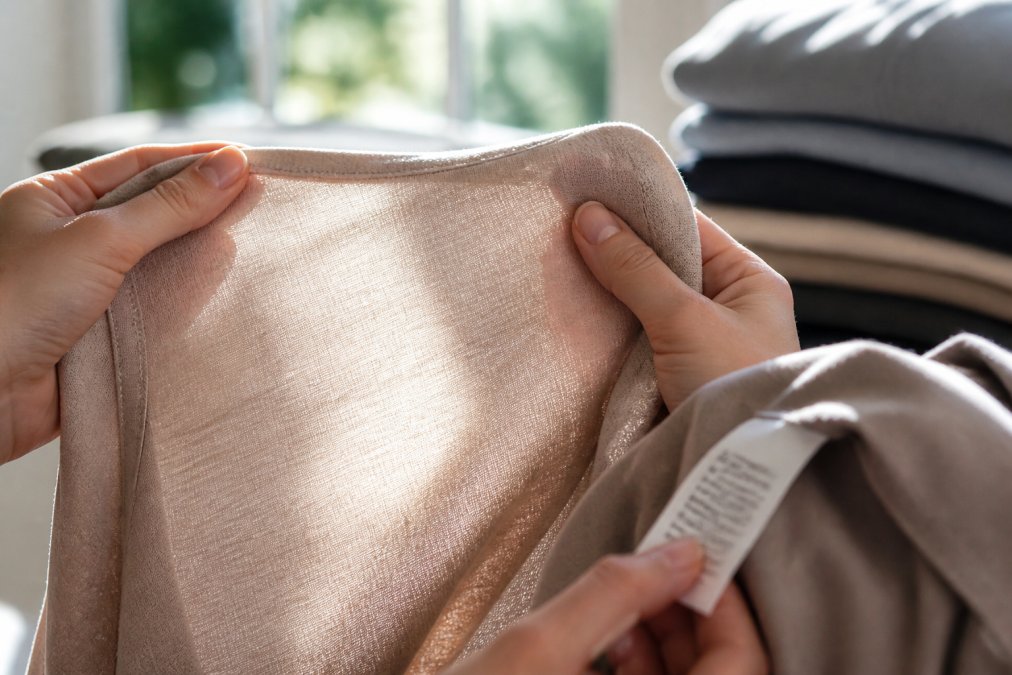
Hold the garment up to light and examine transparency. Many cheap garments are so loosely woven that they're see-through or nearly so. This is a red flag for poor fabric density and shortened lifespan.
Quality apparel maintains opacity without being stiff. The fabric should feel fluid but structured. When you move in it, the garment should move with you rather than clinging or bunching.
Drape is the way fabric falls and moves on your body. Quality apparel drapes well because the fiber content and weight are balanced correctly. Cheap apparel either drapes poorly (stiff, awkward folds) or lacks structure entirely (clings to every contour). The sweet spot is fabric that skims your body without clinging and maintains clean lines when you sit or move.
Signs of Well-Made Clothing: Construction Details That Matter
Construction quality separates apparel that lasts from apparel that disappoints. Even the finest fabric can be undermined by poor stitching, weak seams, or cheap hardware. These details determine whether a garment maintains its shape and integrity through repeated wear and washing.
Stitching and Seam Integrity
Examine the seams closely. Quality stitching is consistent, tight, and straight. Look along the length of a seam. Wavy or uneven stitches indicate rushed production or poor machinery. The stitch count matters: more stitches per inch (typically 10-14 for quality garments) create stronger seams that resist splitting.
Run your finger along the inside of a seam. Does it feel smooth and finished, or rough with loose threads? Quality seams are sealed or serged, meaning the raw edge is finished to prevent fraying and unraveling.
Check for reinforcement at stress points: armholes, crotch seams, and necklines. These areas experience the most tension. Quality apparel has reinforced stitching or topstitching (visible stitching on the outside) that adds both strength and visual interest.
Seam allowance (the distance between the stitch line and the raw edge) should be adequate. Narrow seam allowances are a cost-cutting measure that reduces the garment's lifespan. Quality construction uses generous seam allowances that allow for tailoring and provide margin for error.
Button and Hardware Durability
Buttons and zippers are small details with outsized impact. Cheap buttons are thin plastic that cracks or breaks. Quality buttons are substantial: bone, wood, or reinforced plastic with visible weight and texture.
Check how buttons are attached. They should be sewn with multiple passes through the holes, creating a small thread shank (space between the button and fabric). This distributes stress and prevents the button from pulling off. Buttons sewn flat against the fabric are more likely to break.
Examine zippers. Quality zippers slide smoothly without catching. The teeth should be evenly spaced and aligned. Run the slider up and down several times. Does it move fluidly, or does it bind? Cheap zippers jam and break within months.
Check the buttonholes. They should be finished cleanly with no loose threads or gaps. A poorly finished buttonhole will fray and widen with use, eventually making the button slip through.
Hem Finish and Reinforcement
The hem is where construction quality becomes immediately visible. Look at the inside of the hem. Quality apparel has a finished, professional hem with even stitching and no loose threads. The hem should be flat and lay smoothly against the body.
Examine the hem width. Generous hems (typically 1.5-2 inches for most garments) allow for tailoring and provide stability. Narrow hems are a cost-cutting measure that limits future adjustments and provides less structural support.
Check for reinforcement at hem corners, particularly on knit garments where the hem experiences the most stress.
Reading Care Labels and Understanding Garment Care
Care labels reveal how the manufacturer expects the garment to perform. Quality apparel manufacturers provide detailed care instructions because they've tested the garment under various conditions. Vague or minimal care instructions often indicate the manufacturer hasn't invested in durability testing.
How to Build a Capsule Wardrobe with Quality Pieces
A capsule wardrobe built with high quality apparel is the antidote to fast fashion and decision fatigue. Instead of owning dozens of disposable pieces, you own fewer items that work together and last for years.
Evaluating Price-to-Value and Long-Term Cost
The most expensive garment isn't always the best value. A $200 shirt that falls apart after two seasons is a worse investment than a $80 shirt that lasts five years. Price-to-value requires calculating the true cost of ownership.
Common Mistakes to Avoid When Shopping for Quality Apparel
The biggest mistake is assuming high price equals high quality. Luxury brands charge premium prices for heritage and marketing, not always for superior construction. A mid-range brand with excellent quality control often outperforms a luxury brand coasting on reputation.
Frequently Asked Questions
How can I tell if clothing is high quality when shopping online?
Online shopping requires attention to product descriptions, fiber content percentages, and garment weight specifications. Look for detailed photos showing seams, stitching, and button placement. Read customer reviews mentioning durability and fit consistency. Check the care label information provided, quality pieces offer clear, specific washing instructions. Request fabric swatches if available. High quality apparel retailers provide transparent information about construction methods and materials, making it easier to assess quality before purchase.
What are the signs of well-made clothing I should look for?
Well-made clothing exhibits several hallmarks: straight, tight stitching with appropriate stitch count (12-15 stitches per inch for quality seams), secure buttons and hardware that won't pull loose, finished hems with reinforced corners, and no puckering or loose threads. The fabric should feel substantial without being stiff, with even weave or knit structure. Seams should be serged or finished to prevent fraying. Pattern matching at seams shows attention to detail. Lining quality, interfacing in structured pieces, and topstitching all indicate garment construction that prioritizes durability and longevity.
Why does fabric density matter when identifying quality apparel?
Fabric density, measured in GSM (grams per square meter), directly affects durability, drape, and longevity. Higher density fabrics resist pilling, snagging, and wear better than lightweight alternatives. Dense fabrics maintain their shape through repeated washing and wearing, reducing shrinkage and deformation. They also provide better opacity and hand-feel, the tactile quality that distinguishes premium pieces. When you identify high quality apparel, checking fabric weight helps you understand how the garment will perform over time and justify investment in your wardrobe.
How do natural fibers affect the quality of apparel?
Natural fibers like cotton, linen, and wool offer superior breathability, colorfastness, and sustainability compared to purely synthetic alternatives. They age well, developing character and softness with wear rather than deteriorating. Natural fibers have better tensile strength when properly constructed, resist pilling more effectively, and support temperature regulation. Synthetic blends can enhance durability and ease of care, but 100% natural or high-percentage natural fiber content typically signals higher quality construction and intentional design. Check fiber content labels to understand what you're investing in and how the piece will perform long-term.


