

Table of Contents
- Why Daily Wear Demands More From Your Jewelry
- The Best Metals for Everyday Jewelry
- Solid Gold vs Gold Vermeil Durability
- How to Clean Fine Jewelry at Home
- Clasp and Setting Durability: The Details That Matter
- Chemical Reactivity and Lifestyle Hazards
- Building a Capsule Collection for Everyday Wear
- Frequently Asked Questions
Last Updated: September 13, 2026
Why Daily Wear Demands More From Your Jewelry
Choosing durable jewelry for daily use comes down to one principle: match the metal and construction of your durable jewelry to how you actually live. At TresAdore, pieces worn daily for years share three traits: a hard, corrosion-resistant metal, a secure clasp, and a setting that doesn't snag.
Daily wear is abrasive in ways most buyers underestimate. Lotion, sunscreen, chlorine, sweat, and desk edges attack metal surfaces over time; the American Gem Society notes even precious metals wear gradually with constant friction. Hardness and corrosion resistance matter more than sparkle for everyday pieces.
Below: which metals hold up, how to clean fine jewelry at home, and the construction details that separate a piece that lasts a decade from one that dulls in a year.
The Best Metals for Everyday Jewelry
The best metals for everyday jewelry balance hardness, corrosion resistance, and comfort. Platinum and stainless steel lead for durability, 14k gold offers the best mix of wearability and value, and titanium wins for lightweight strength. Sterling silver and gold vermeil are softer, suiting rotation pieces more than 24/7 wear.

Here's how the common options compare:
| Metal | Relative Hardness | Tarnish Risk | Best For |
|---|---|---|---|
| Platinum | Very high | None | Heirloom daily rings |
| Stainless steel | High | None | Casual, active wear |
| Titanium | High | None | Lightweight comfort |
| 14k gold | Moderate | Low | Versatile everyday pieces |
| Sterling silver | Low | High | Occasional rotation |
| Gold vermeil | Low | Moderate | Dressier rotation |
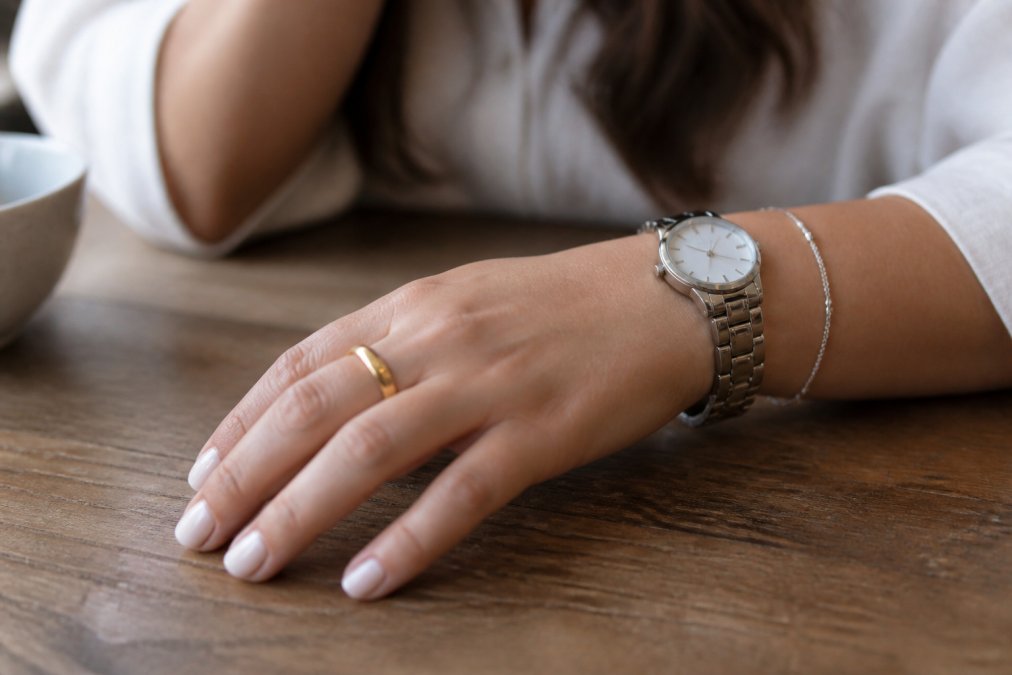
Gold, Platinum, and Stainless Steel
Gold's durability depends on its karat: higher karat means softer metal, so 14k gold resists scratching better than 18k or 24k for daily wear. Platinum is denser and develops a patina rather than losing metal, making it a favorite for rings worn constantly. Stainless steel resists corrosion, holds a polish, and costs far less.
Hypoallergenic Options for Sensitive Skin
Skin sensitivity usually traces to nickel, a common alloy in lower-cost jewelry. Titanium, platinum, and surgical-grade stainless steel are safest for reactive skin because they contain little to no nickel. Sterling silver and 14k gold are generally well tolerated, though anyone with a known nickel allergy should confirm the alloy before buying.
Solid Gold vs Gold Vermeil Durability
Solid gold outlasts gold vermeil by a wide margin: vermeil is a thin gold layer over sterling silver that wears away with friction, while solid 14k gold is the same metal all the way through and can be polished and repaired indefinitely. Vermeil measures just a few microns thick, and that layer thins with daily contact, especially on rings and bracelets.

The trade-off is cost and weight. Vermeil gives you the look of gold at a fraction of the price, reasonable for earrings or necklaces that see less friction. For anything worn against the skin daily, solid gold is the better long-term investment. For a curated everyday wardrobe, a sterling silver and gold-plated pendant offers an elegant middle ground when rotated rather than worn constantly.
How to Clean Fine Jewelry at Home
Most fine jewelry can be cleaned at home with warm water, a drop of mild dish soap, and a soft-bristle brush. Skip harsh chemicals, bleach, and abrasive toothpaste, which can strip plating and scratch softer metals. The Gemological Institute of America's jewelry care guidance recommends gentle cleaning and regular inspection to catch loose stones early.
"Gentle cleaning" means something different for each metal: the failure mode is chemical, not just mechanical, and the wrong method actively removes material.
What Each Cleaner Actually Does to Each Metal
| Cleaner | 14k/18k Gold | Platinum | Sterling Silver | Gold Vermeil | Stainless Steel |
|---|---|---|---|---|---|
| Mild dish soap + warm water | Safe | Safe | Safe | Safe | Safe |
| Ammonia-based commercial dip | Safe (occasional) | Safe | Safe | Avoid, attacks the gold layer | Safe |
| Ultrasonic cleaner | Safe if stones are secure | Safe | Safe | Avoid, vibration lifts thin plating | Safe |
| Abrasive polish or toothpaste | Avoid, micro-scratches | Avoid | Acceptable for heavy tarnish only | Avoid, wears through in one session | Avoid |
| Chlorine or bleach | Avoid | Avoid | Avoid | Avoid | Avoid |
The mechanism matters. Ammonia dissolves the copper and silver alloys used to harden gold, so repeated dips gradually pit a 14k surface. Ultrasonic vibration is harmless to solid metal but can lift a plating layer measured in single-digit microns. Abrasive polish removes a thin layer of metal every time, fine on a solid heirloom you plan to re-polish, ruinous on vermeil.
Step-by-Step Cleaning by Metal Type
Solid gold, platinum, and stainless steel:
- Fill a bowl with warm water and one drop of mild dish soap.
- Soak the piece for 10 to 15 minutes to loosen oils and lotion.
- Gently scrub with a soft brush, focusing on crevices and the setting.
- Rinse under warm water, keeping the drain closed.
- Pat dry with a lint-free cloth and let it air fully before storing.
- Inspect clasps and prongs for looseness while the piece is clean.
Sterling silver: Follow the same steps, but dry immediately and completely, silver tarnishes fastest when moisture sits on the surface. An anti-tarnish polishing cloth handles light tarnish without removing metal. Store silver in a tarnish-resistant pouch or a zip bag with the air pressed out.
Gold vermeil and plated pieces: Skip soaking. Wipe with a damp soft cloth, dry immediately, and never use polish, dips, or ultrasonic cleaners. The gold layer is a few microns thick, and every abrasive contact shortens its life.
Pieces with stones: Soft stones, opal, pearl, turquoise, emerald, should never be soaked or ultrasonically cleaned; use a barely damp cloth only. Hard stones like diamond, sapphire, and ruby tolerate the full soap-and-brush routine.
The Repairability Question: What a Jeweler Can and Cannot Fix
Before you buy, it helps to know which "durable" metals are actually serviceable. This detail changes the long-term math.
- Solid gold, platinum, and sterling silver: Fully repairable. A jeweler can re-tip prongs, re-shank a ring, re-solder a broken chain, and re-polish the surface indefinitely. The metal is the same all the way through, so there is always fresh material to work with.
- Stainless steel: Repairable for structural issues like a broken clasp or stretched link, but resizing and re-polishing are limited. Many jewelers lack the equipment to weld it cleanly, and the finish is often a surface treatment that cannot be restored once scratched.
- Titanium: Strong but difficult to work. Most jewelers cannot resize or re-solder titanium in-house, so a sizing change may mean replacement rather than repair.
- Gold vermeil and plated jewelry: Effectively disposable once the plating wears through. Re-plating often costs more than the piece is worth, and the underlying sterling or base metal is rarely finished to stand alone.
The practical takeaway: a piece is only as durable as its repairability. A $400 solid gold ring you can re-polish for decades can outlast three $150 vermeil rings that each become unwearable in a year or two.
Ask a jeweler two questions before buying: "Can this be resized?" and "Can this be re-polished or re-plated?" If the answer to either is no, price the piece as a temporary purchase, not an heirloom.
Clasp and Setting Durability: The Details That Matter
A strong metal means nothing if the clasp fails or the setting loosens. The clasp and setting are where most everyday jewelry breaks, not the metal itself. A lobster clasp outlasts a spring ring for bracelets and necklaces, and a bezel or channel setting protects stones better than tall prongs that catch on clothing.
What most buyers miss is that a heavy pendant on a thin chain stresses the clasp with every movement. Match chain weight to pendant weight, and check the jump ring, the small connector that often bends first. For watches, a durable stainless steel automatic watch with a secure butterfly clasp handles constant wear far better than a friction-fit band.
Chemical Reactivity and Lifestyle Hazards
Everyday chemicals, not just wear, drive most jewelry damage. Chlorine, perfume, sunscreen, and cleaning products react with metals and accelerate tarnish or oxidation. The U.S. Environmental Protection Agency's guidance on household chemicals notes that many common cleaners contain reactive compounds, and those same compounds dull or discolor jewelry on contact.
Skin pH plays a role too. Some people's natural oils and acidity speed up oxidation on sterling silver and lower-karat gold, which is why one person's ring stays bright while another's darkens within weeks. The fix is simple: apply perfume and lotion first, let them dry, then put jewelry on. Remove pieces before swimming, cleaning, or heavy exercise.
Keep a small dish by the sink for rings and bracelets. The two biggest causes of everyday damage are chlorine exposure and loss down the drain, and both disappear when you build a consistent removal habit.
Building a Capsule Collection for Everyday Wear
A durable capsule collection starts with a few hard-wearing staples you can rotate, not a drawer full of delicate pieces. Aim for one everyday ring, one versatile necklace, one pair of studs, and one bracelet in your most durable metal. Rotation gives each piece time to recover from daily exposure and extends the life of the whole set.
But rotation alone doesn't make a collection durable. The pieces that survive years of daily wear share mechanical traits that matter more than any metal list.
The Mechanics That Decide Whether a Piece Lasts
Clasps. A lobster claw clasp outlasts a spring ring because its spring is enclosed and its closure is positive, it cannot open from a glancing snag. Spring rings rely on a thin internal wire that fatigues and eventually fails. For anything worn daily, choose lobster claw; for high-value pieces, a figure-eight safety catch or screw clasp adds a second point of failure protection.
Chain-to-pendant weight ratio. A heavy pendant on a thin chain stresses the clasp and jump ring with every movement. The chain should be rated to carry at least several times the pendant's weight. A jump ring, the small connector that often bends first, should be soldered closed on any piece worn daily.
Settings. A bezel or channel setting protects stones better than tall prongs that catch on clothing. Prong settings are repairable and show more of the stone, but need inspection every few months. Bezel settings hide the girdle of the stone and are far less likely to snag, making them the better choice for rings worn through workouts and commutes.
Earring backs. Push backs loosen with repeated removal. Screw backs and locking backs hold better for studs worn continuously, especially during sleep or exercise.
Match the Piece to Your Body Chemistry, Not Just Your Lifestyle
Skin pH and natural oils vary from person to person, and they change how metals behave on your skin. This is why one person's sterling silver ring stays bright for years while another's darkens within weeks, same metal, same care routine, different body chemistry.
- Sterling silver reacts most visibly. Higher skin acidity and sulfur compounds in sweat accelerate tarnish and the greenish discoloration some wearers see. If silver turns on you quickly, it belongs in rotation, not constant wear.
- Lower-karat gold contains more alloyed copper and silver, so it can discolor on reactive skin. Higher-karat gold and platinum are far more stable.
- Titanium, platinum, and surgical-grade stainless steel are the most inert options for reactive skin and the safest bet for a piece you never take off.
A practical test: wear a candidate metal for a week before committing to a full set. If it discolors or irritates, it is a rotation piece, not a foundation piece.
A Concrete Starter Set
For a low-maintenance everyday piece, a lightweight gemstone set weighs little and travels well, making it easy to keep in rotation. A casual wooden watch is another practical pick for active days, since wood and leather resist the corrosion that plagues plated metals. The Federal Trade Commission's guidance on jewelry marketing claims reminds buyers that terms like "gold" and "hypoallergenic" carry specific meanings, so read the fine print before assuming a piece is solid or nickel-free.

A durable starter set might look like this:
- One foundation ring in 14k gold, platinum, or titanium with a bezel setting, worn daily, resized and re-polished as needed.
- One necklace with a lobster claw clasp and soldered jump ring, in a metal that matches your body chemistry.
- One pair of studs with screw backs in titanium or 14k gold.
- One bracelet in stainless steel or solid gold with a lobster claw clasp, the piece most likely to be lost, so choose accordingly.
Everything else in the collection is a rotation piece. Buy those for style, not for permanence.
Choose one durable metal as your foundation, then add rotation pieces around it. Fewer, harder-wearing items beat a large collection of delicate ones for daily use, and the pieces that last are the ones whose clasps, settings, and body chemistry all line up.
Frequently Asked Questions
What is the most durable metal for everyday jewelry?
Platinum and stainless steel are the most durable for daily wear. Platinum resists scratches and holds its shape, while stainless steel is hard-wearing and corrosion-resistant. For gold, 14k or higher offers a good balance of durability and appearance. Titanium and tungsten are also hard-wearing options for rings.
Does gold-plated jewelry hold up to daily wear?
Gold-plated jewelry typically does not hold up to daily wear. The thin layer of gold can wear away over time, exposing the base metal. Gold vermeil, which has a thicker gold layer over sterling silver, lasts longer but still requires care. For everyday use, solid gold or stainless steel is more reliable.
How do I maintain the shine of my everyday jewelry?
Clean your jewelry regularly with mild soap and warm water, then dry with a soft cloth. Avoid harsh chemicals and remove pieces before swimming or exercising. Store each item separately to prevent scratches. For sterling silver, use a polishing cloth to remove tarnish. Following these steps helps maintain shine and extends the life of your jewelry.
What is the difference between solid gold and gold-filled jewelry?
Solid gold is made entirely of gold alloy, while gold-filled jewelry has a thick layer of gold bonded to a base metal. Gold-filled pieces are more durable than gold-plated but less valuable than solid gold. For daily wear, solid gold is the most durable, but gold-filled can be a cost-effective alternative if cared for properly.
Building a wardrobe of jewelry that survives real life takes intention, and that's exactly where TresAdore fits. Our hand-selected collection of fine jewelry and premium accessories is chosen for genuine, lasting quality, not fast-fashion turnover, so every piece earns its place in your rotation. Explore the collection and find durable pieces built to be worn every day, not saved for special occasions.


