

Table of Contents
- How Red Light Therapy Devices Speed Up Muscle Recovery
- What to Look For in Red Light Therapy Devices
- Our Top Picks for Muscle Recovery at Home
- How to Use Red Light Therapy for Soreness
- Red Light Therapy Session Duration: How Often and How Long
- Safety, FDA Clearance, and What to Avoid
- Final Verdict: Which Device Fits Your Recovery Routine?
- Frequently Asked Questions
Last Updated: September 8, 2026
Red light therapy is a non-invasive treatment that uses specific wavelengths of light to penetrate tissue and support cellular repair. For athletes and active adults, red light therapy devices for muscle recovery have moved from clinical settings into home routines. This guide from TresAdore breaks down how these devices work, what specifications matter, and which options deliver results.

The science, known as photobiomodulation, centers on how light interacts with mitochondria. When near-infrared light reaches your cells, it can influence the production of adenosine triphosphate, the energy currency your body uses for repair. The practical effect is reduced inflammation and improved blood circulation, which is why many users report faster recovery and less delayed onset muscle soreness. Below, we cover the key wavelengths, power density, and treatment protocols you need.
How Red Light Therapy Devices Speed Up Muscle Recovery
Red light therapy accelerates recovery by delivering light energy into muscle tissue, supporting mitochondrial function and cellular repair. The therapeutic window typically falls between 660nm and 850nm, with near-infrared wavelengths reaching deeper tissue layers than visible red light (peer-reviewed research). This light exposure can help reduce oxidative stress and calm the inflammatory response that drives soreness.
Heat relaxes surface tissue, while photobiomodulation works at the cellular level to influence how your body repairs itself. Clinical trials have shown measurable effects on muscle soreness and joint stiffness, which is why professional sports teams and physical therapy clinics have adopted the technology.
What to Look For in Red Light Therapy Devices
Choosing the right device comes down to three specifications: wavelength, power density, and treatment area. Many home-use devices advertise red light therapy benefits, but the irradiance, or power density, determines how much light actually reaches your tissue. A device with low power density will require significantly longer treatment time to deliver the same dose.

Wavelength and Tissue Penetration
Wavelength determines how deep the light travels. Red light around 660nm works primarily on surface tissue and skin, while near-infrared light around 850nm penetrates deeper into muscles and joints. For muscle recovery, you want a device that includes near-infrared output, since that is the wavelength capable of reaching the tissue that is actually sore. Devices that offer both red and near-infrared, called dual-wave or double-wave technology, give you the most flexibility.
Power Density and Treatment Time
Power density, measured in milliwatts per square centimeter, directly affects how long each session needs to last. Higher irradiance means you can achieve a therapeutic dose in a shorter period. A common approach is to look for devices that deliver an effective dose in 10 to 20 minute sessions, since that fits realistically into a post-workout routine. Devices with lower power output may require 30 minutes or more, making them harder to stick with.
Our Top Picks for Muscle Recovery at Home
After evaluating wavelength coverage, power, and practical usability, these devices from TresAdore stand out for different recovery needs.
Best Full-Body Option: 1444 LED Infrared Physiotherapy Mat
For whole-body recovery, the 1444 LED Infrared Physiotherapy Mat is the most comprehensive option at $595.00. Its extra-large 180x80cm surface contains 1,444 LED lights using dual-wave technology, combining infrared and red light for broad pain relief across the back, hips, and legs. The TPU material is durable and easy to clean, and the integrated LED display makes it simple to control session time. If you train hard several days a week and want a full-body treatment after workouts, this mat delivers coverage smaller devices cannot.

Best for Targeted Relief: LED Red Light Physiotherapy Panel
The LED Red Light Physiotherapy Panel at $199.95 is built for focused treatment of specific areas like a sore lower back or tight shoulders. It combines red light wavelengths for skin and surface relief with an infrared heating function for deeper tissue treatment. The panel is manufactured to ISO 13485 and MDSAP certified standards, speaking to medical-grade quality control. Its compact 310x310mm size means it can sit on a table or floor and be positioned directly over the area needing attention.
Best Portable Choice: Red Light Therapy Device
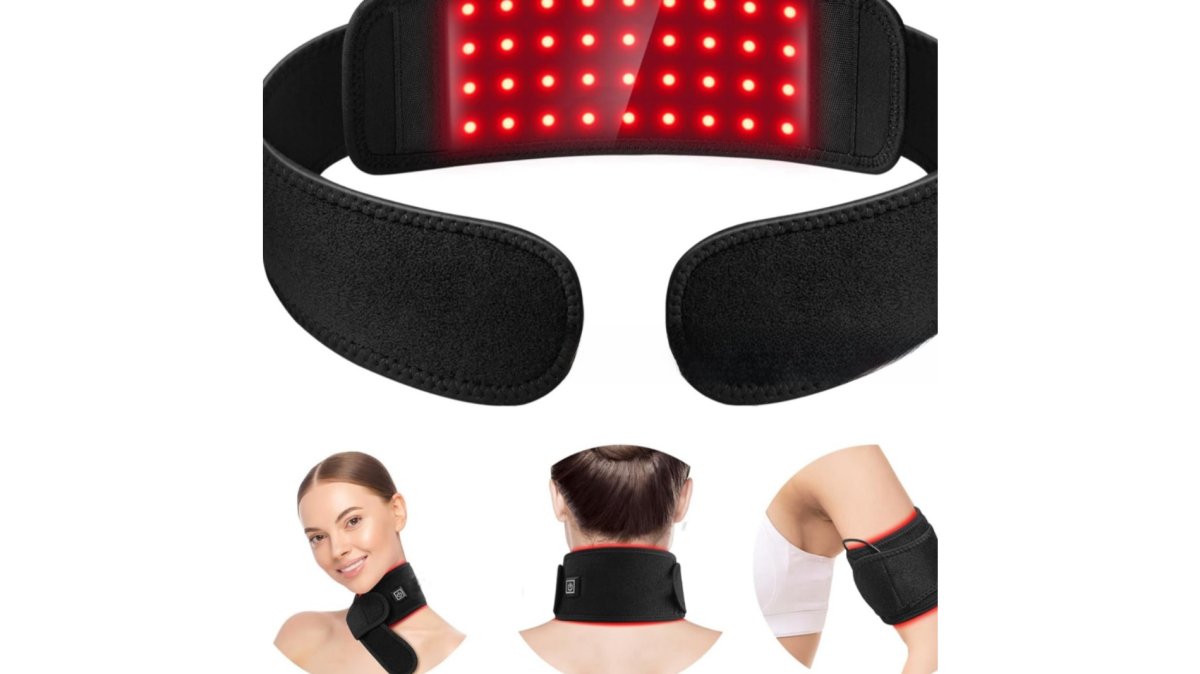
At $99.95, the Red Light Therapy Device is the most accessible entry point, and its ergonomic design is its defining feature. Contoured to fit the neck and wrist comfortably, it combines 660nm and 850nm wavelengths with a soothing heat function. The device offers four intensity settings, from weak to flashing, letting you adjust treatment based on sensitivity. It is ideal for someone who sits at a desk all day and needs consistent relief for a stiff neck or sore forearms without dedicating space to a larger panel.
Best for Deep Penetration: InfraRed and Red Light Therapy Blanket
The InfraRed and Red Light Therapy Blanket at $999.00 is the premium choice for users who want deep tissue penetration combined with the comfort of a heated blanket. It combines 660nm red light with 850nm infrared light and adds intelligent temperature control with five precision settings ranging from 40 to 65 degrees Celsius (the FDA). The foldable, lightweight design makes it practical for travel, and its 180x70cm size covers the full torso. If your recovery routine includes cold plunges or contrast therapy, this blanket is an effective tool for the warming phase that helps restore blood flow.
| Device | Price | Wavelengths | Best For | Key Feature |
|---|---|---|---|---|
| 1444 LED Mat | $595.00 | Dual-wave | Full-body recovery | 1,444 LEDs, 180x80cm surface |
| Physiotherapy Panel | $199.95 | Red + Infrared | Targeted deep relief | Medical-grade certification |
| Portable Device | $99.95 | 660nm + 850nm | Neck and wrist | Ergonomic, 4 intensity modes |
| Therapy Blanket | $999.00 | 660nm + 850nm | Deep penetration | Heated, 5 temperature settings |
How to Use Red Light Therapy for Soreness
Using red light therapy for soreness requires a protocol, not just a one-off session. A common mistake is treating it like a topical cream, applying it once after a hard workout and expecting immediate results. To get the most out of your device, differentiate between acute injury care and post-training maintenance, as the timing and frequency differ significantly.
Protocol for Acute Soreness and Minor Injuries
For acute muscle soreness, particularly delayed onset muscle soreness (DOMS) that peaks 24 to 48 hours after exercise, the goal is to quell the inflammatory cascade (acsm.org). Start treatment within a few hours post-exercise if possible, then continue daily for the next 3 to 5 days.
- Post-Marathon or Long-Endurance Event: Focus on the quadriceps, hamstrings, and calves. Use a full-body mat or large panel for 20 minutes, ensuring the posterior chain is within a few inches of the light source. For the next two days, repeat this session once daily. On day three, you can switch to a 10-minute targeted session on the most tender spots.
- Post-Weightlifting (Heavy Resistance): The goal is to manage localized inflammation in the trained muscle group (e.g., chest, back, or legs). Use a targeted panel directly over the muscle belly for 10-15 minutes. Do this immediately post-workout and again the following morning. This high-frequency, short-duration approach is often more effective than a single long session.
- Joint or Tendon Strain (e.g., knee, elbow): For connective tissue, consistency over a longer period is key. Use a targeted device on the joint for 10 minutes daily for up to two weeks. Unlike muscle, tendons have lower blood flow, so the cumulative effect of daily dosing is critical for supporting repair.
Protocol for Maintenance and Performance
For daily maintenance to support training adaptations and prevent stiffness, you don't need the high frequency of an acute protocol. A sustainable rhythm is 3 to 4 sessions per week.
- Pre-Workout Priming: A short 5-10 minute session on the muscle groups you are about to train can increase local blood flow and prepare the tissue for load.
- Post-Workout Systemic Session: Use a full-body mat for 15-20 minutes after a hard session to support overall reduction of systemic oxidative stress.
Red Light Therapy Session Duration: How Often and How Long
The ideal red light therapy session duration for muscle recovery is 10 to 20 minutes per treated area, performed once daily. This timeframe is supported by the power density of most effective home devices, which are designed to deliver a therapeutic dose within that window. If you are using a full-body mat, a single 15 to 20 minute session can cover multiple muscle groups at once.
For acute injury or a specific sore spot, target that area daily for up to two weeks. For long-term maintenance, such as supporting joint health between training cycles, three to four sessions per week is a sustainable rhythm. Consistency matters more than session length, and a 10 minute daily session will outperform a 40 minute session done once a week.
Safety, FDA Clearance, and What to Avoid
Red light therapy is considered low-risk for most healthy adults, but understanding device compliance is important. When evaluating red light therapy devices, check whether the manufacturer holds FDA clearance or registration for their production processes. Devices that are FDA-cleared have met specific regulatory standards for safety and efficacy. The physiotherapy panel from TresAdore, for example, is manufactured under ISO 13485 and MDSAP certified standards with FDA, CE, and TGA compliance, signaling a higher level of quality control than unbranded imports.
Avoid devices that make exaggerated claims about curing diseases or replacing medical treatment. Red light therapy is a recovery tool, not a medical intervention. If you have a chronic condition, are pregnant, or are taking medications that increase light sensitivity, consult a healthcare professional before starting a regular routine. Be cautious of devices with very low power output that advertise extremely short session times, since they may not deliver enough light energy to produce meaningful results.
Final Verdict: Which Device Fits Your Recovery Routine?
The right red light therapy device for your routine depends on the scope of your recovery needs. If you want a single tool that covers your whole body after intense training sessions, the 1444 LED Infrared Physiotherapy Mat offers the best coverage for its price. For targeted treatment of a chronically tight neck or a specific joint, the portable device or the physiotherapy panel gives you precise control without taking up space.
The key is to match the device to your actual habit. A $99.95 portable unit that you use daily will deliver more value than a $999.00 blanket that stays folded in a closet. Start with the area that bothers you most, commit to a consistent 10 to 20 minute daily session, and build from there.
Building a Synergistic Recovery Stack
Where red light therapy truly shines is when it is integrated into a broader recovery system. Most guides treat it as an isolated tool, but the most effective athletes combine it strategically with other modalities to amplify the effects.
- Red Light + Cold Plunge (Contrast Therapy): The physiological rationale is strong. Cold exposure constricts blood vessels and reduces acute inflammation, while the subsequent warming phase (which red light supports) drives vasodilation and a rush of nutrient-rich blood to the tissue. A practical protocol is to use the cold plunge immediately post-workout for 5-10 minutes, followed by a 15-20 minute session on the red light mat or blanket. The red light helps the body transition out of the cold-induced vasoconstriction more efficiently, potentially reducing the 'rebound' shiver and stiffness.
- Red Light + Compression Boots: Compression boots work mechanically to move lymphatic fluid and reduce swelling. Red light works at the cellular level. Using them in tandem is not redundant; it addresses two different recovery pathways. Use the compression boots for 15-20 minutes first to physically flush the limbs, then follow with a 10-minute red light session on the legs to support cellular repair in the now-decongested tissue.
- Red Light + Massage Therapy: Massage breaks up adhesions and triggers the parasympathetic nervous system. Applying red light to the area before a massage can increase local blood flow, making the tissue more pliable and responsive to the therapist's work.
Choosing the right recovery tool is about matching the technology to your lifestyle, not chasing the most expensive option. At TresAdore, we curate devices that are genuinely worth owning, focusing on medical-grade quality and practical design that fits into your routine. Explore our red light therapy collection to find the device that supports your recovery, and pair it with our foldable ice bath bucket for a complete contrast therapy approach. Get started with TresAdore and build a recovery routine that keeps you performing at your best.
Frequently Asked Questions
Does red light therapy really work for muscle recovery?
Yes. Red light therapy, also called photobiomodulation, uses specific wavelengths of red and near-infrared light to penetrate tissue and stimulate mitochondrial function. This increases adenosine triphosphate (ATP) production, which helps reduce inflammation and oxidative stress while supporting cellular repair. Clinical trials show it can reduce muscle soreness after exercise and speed up recovery speed. The key is using the correct wavelength, around 660nm and 850nm, and enough power density to reach the muscle tissue.
How often should I do red light therapy for muscle recovery?
For muscle recovery, most protocols recommend using a device 3 to 5 times per week. For acute soreness after a hard workout, you can use it daily for the first few days. Treatments are cumulative, so consistent use over several weeks produces better results than occasional sessions. Each session typically lasts 10 to 20 minutes depending on the device's power density and the size of the area you are treating. Consistency matters more than longer sessions.
What is the difference between red and near-infrared light for muscle recovery?
Red light around 660nm works mainly on the skin and surface tissues, making it excellent for skin rejuvenation and superficial muscle recovery. Near-infrared light around 850nm penetrates deeper into muscle tissue, joints, and bones, making it more effective for deep muscle soreness and joint stiffness. Many high-quality devices include both wavelengths so you get the benefits of surface-level cellular repair and deep tissue penetration in one session.
Are there FDA-cleared red light therapy devices for home use?
Yes. Several home-use devices are FDA-cleared, which means they have been reviewed for safety and effectiveness for specific uses like pain relief. When shopping, look for devices that state FDA clearance and are manufactured under certified standards like ISO 13485. This certification ensures the device is built to medical-grade quality standards. The LED red light physiotherapy panel at TresAdore is manufactured under ISO 13485 and MDSAP certified production standards.


