

Table of Contents
- Research the Seller and Verify Reputation
- Understanding Metal Types and Karats for Fine Jewelry
- Understanding Diamond Certification Reports
- How to Verify Jewelry Authenticity Online
- How to Measure Ring Size at Home
- Fine Jewelry Return Policy Checklist Before You Buy
- Digital Security and Payment Protection
- Setting Your Budget and Finding Value
- Frequently Asked Questions
Last Updated: September 26, 2026
Buying fine jewelry online requires careful attention to authenticity, quality, and seller reputation. Unlike purchasing from a brick-and-mortar store where you can inspect pieces in person, online shopping demands a different skill set. The most successful purchases share common characteristics: thorough research, verification of credentials, and understanding what to look for in certifications and product details. This guide breaks down the essential tips for buying fine jewelry online so you can shop with confidence.
Research the Seller and Verify Reputation
Before adding anything to your cart, investigate the seller's credibility. Start with customer reviews across multiple platforms, not just their website. Look for patterns in feedback: Do customers consistently mention fast shipping? Are there complaints about quality discrepancies between product photos and what arrived? Legitimate sellers welcome scrutiny and maintain transparent communication.
Check for business registration and licensing. A reputable fine jewelry seller should clearly display their business credentials, return address, and contact information. Search for the company name paired with "complaints" or "reviews" to surface any recurring issues. Look for industry memberships or certifications that indicate professional standing.
Payment security matters significantly. Ensure the website uses HTTPS encryption (visible as a padlock icon in your browser). Reputable sellers offer secure checkout options and clearly state their fraud protection policies. Avoid sellers who pressure you to use wire transfers or cryptocurrency, as these payment methods offer minimal buyer protection.
Understanding Metal Types and Karats for Fine Jewelry
Fine jewelry typically features precious metals: gold, platinum, and sterling silver. Each metal has distinct properties that affect durability, appearance, and value.
Gold comes in different purities measured in karats. 24-karat gold is pure but too soft for jewelry that will be worn regularly. 18-karat gold (75% pure) offers an excellent balance of durability and purity, making it ideal for engagement rings and heirloom pieces. 14-karat gold (58.3% pure) is more affordable and extremely durable. 10-karat gold is the legal minimum for marking something as "gold" in the United States, but contains only 41.7% pure gold.
Platinum is denser and more durable than gold, making it excellent for securing precious gemstones. It's hypoallergenic and maintains its natural white color without replating. Platinum jewelry typically costs more than gold due to its rarity and weight.
Sterling silver is 92.5% pure silver mixed with other metals for strength. It's more affordable than gold or platinum but requires regular maintenance to prevent tarnishing. Sterling silver is marked with "925" to indicate its purity.
When shopping for fine jewelry online, verify the metal content through hallmarks. Legitimate sellers always disclose the karat weight or metal purity clearly in product descriptions. Be wary of vague descriptions like "gold-plated" without specifying the base metal underneath.
Understanding Diamond Certification Reports
A diamond certification report, often called a grading report, is your assurance of quality when buying fine jewelry online. The most recognized certifying bodies are the Gemological Institute of America (GIA) and the American Gem Society (AGS). These independent laboratories examine diamonds and provide detailed assessments.
A certification report includes the "Four Cs": carat weight, color grade, clarity grade, and cut quality. Carat weight measures the diamond's size; color grades range from D (colorless) to Z (light color); clarity assesses the presence of inclusions; cut evaluates how well the diamond was shaped.
Request the certification report number from the seller and verify it directly on the GIA or AGS website. Never rely solely on the seller's image of the report. Legitimate sellers provide this verification without hesitation because it protects both parties.
Pay attention to the report's fine print. A diamond might be certified as "VS1 clarity" (very slightly included), meaning inclusions are invisible to the naked eye, an excellent value point. However, a lower grade like "SI1" (slightly included) might show visible inclusions under magnification, which affects the stone's brilliance and your satisfaction.
How to Verify Jewelry Authenticity Online
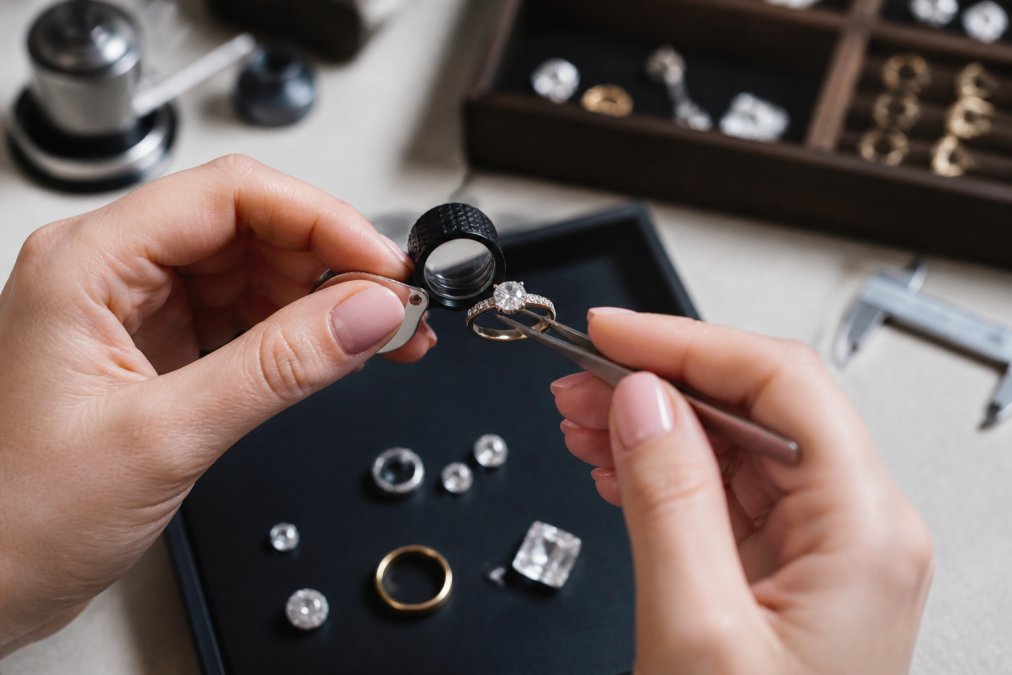
Authenticity verification begins with hallmarks. These tiny stamps indicate metal purity and often include the jeweler's mark. A legitimate piece of fine jewelry will have clear, well-defined hallmarks. Counterfeit items often display blurry or poorly stamped marks.
Check the weight and feel. Precious metals have specific densities. Platinum feels noticeably heavier than gold for the same volume. Sterling silver has a particular heft that costume jewelry cannot replicate. If something feels suspiciously light, request specifications from the seller or have it professionally weighed.
Examine gemstone setting techniques. In fine jewelry, gemstones are typically set using prong settings, bezel settings, or pavé work, all of which require precision craftsmanship. Loose stones or gaps between the stone and setting suggest lower quality or counterfeit work.
Request high-resolution product photography. Legitimate sellers provide multiple angles, macro shots showing hallmarks, and close-ups of gemstone details. These images should reveal the quality of metalwork and the clarity of any stones. If a seller provides only low-resolution photos or refuses to share detailed images, move on.
Ask the seller directly about their authentication process. Reputable fine jewelry retailers have established protocols for verifying authenticity before items ship. They should confidently explain these procedures.
Women’s Luxury Starry Sky Pearl →
How to Measure Ring Size at Home
Ring sizing accuracy prevents the frustration of ordering a piece that doesn't fit. Online ring sizing requires precision since you cannot try on the piece before purchase.
The most reliable method uses a ring you already own that fits well. Place it on a flat surface and measure the inside diameter in millimeters using a ruler or measuring tape. Cross-reference this measurement with a ring size chart provided by the seller. Most jewelers offer these charts on their websites.
Alternatively, wrap a piece of string around your finger at the point where the ring should sit, typically just below the knuckle. Mark where the string overlaps, then measure this length in millimeters. Convert this measurement to ring size using a sizing chart.
Consider that ring size can change with temperature, time of day, and season. Your fingers are slightly larger in warm weather and swell slightly throughout the day. Measure in the morning when your fingers are at their normal size, or measure multiple times throughout the day and average the results.
When ordering from fine jewelry retailers, check their sizing policy. Many offer free resizing within a certain timeframe, providing a safety net if your initial measurement was slightly off. This benefit protects your investment and ensures the piece fits perfectly.
Fine Jewelry Return Policy Checklist Before You Buy
Before completing your purchase, thoroughly review the return policy. This document protects you if the piece doesn't meet expectations or arrives damaged.
Key points to verify:
| Policy Element | What to Confirm |
|---|---|
| Return Window | Minimum 30 days; 60+ days is ideal for fine jewelry |
| Condition Requirements | Whether item must be unworn or if light wear is acceptable |
| Return Shipping | Whether seller covers costs or buyer pays |
| Restocking Fees | Whether returns incur deductions (avoid policies with fees over 10%) |
| Refund Timeline | How long until money is returned to your account |
| Exchanges | Whether you can exchange for different size or style |
| Damage Coverage | Whether damage during shipping is covered |
Reputable sellers stand behind their products and offer generous return windows. If a seller restricts returns to 14 days or less, or charges restocking fees exceeding 15%, reconsider your purchase. Fine jewelry is a significant investment, and the seller should demonstrate confidence in their quality.
Document everything. Take screenshots of the product listing, certification details, and return policy before purchasing. If issues arise, this documentation supports your case for a return or refund.
Digital Security and Payment Protection
Protecting your personal and financial information is critical when shopping for fine jewelry online. Cybersecurity breaches can expose sensitive data, leading to identity theft or unauthorized charges.
Use a credit card rather than debit card or bank transfer for online jewelry purchases. Credit cards offer fraud protection under federal law, allowing you to dispute charges if unauthorized transactions occur.
Federal Trade Commission guidance on online shopping security
Setting Your Budget and Finding Value
Fine jewelry represents a significant financial commitment, so establishing a realistic budget prevents overspending and helps you prioritize features that matter most.
American Gem Society resources on diamond value
Frequently Asked Questions
What should I look for when buying fine jewelry online?
Prioritize seller reputation, authentic hallmarks, and GIA certification for diamonds. Examine high-resolution product photography showing macro shots and multiple angles. Verify the metal type and karat weight match the listing description. Check the return policy, shipping insurance options, and customer reviews. Confirm secure checkout with SSL encryption and trusted payment methods.
How can I verify the authenticity of jewelry purchased online?
Look for hallmarks stamped inside the piece indicating metal purity (925 for sterling silver, 14K or 18K for gold). Request a GIA report for diamonds or gemstones. Authentic sellers provide detailed macro photography and weight specifications. Ask about the gemstone treatment history and whether stones are lab-grown or natural. Avoid sellers unwilling to provide documentation or high-resolution images from multiple angles.
How do I determine my ring size at home?
Use a ruler to measure the inside diameter of a ring that fits comfortably on the intended finger. Compare this measurement to a ring size chart available on most jewelry retailer websites. Alternatively, visit a local jeweler for a free sizing. Order during cooler times of day when fingers are less swollen. Many fine jewelry retailers offer free resizing within 30 days of purchase, so slight sizing errors can be corrected without additional cost.
What does a GIA report tell me about a diamond?
A GIA report documents the diamond's carat weight, color grade, clarity grade, and cut quality, the four factors determining value and appearance. It includes a unique identification number and laser inscription on the stone itself. The report notes any gemstone treatments or enhancements. This certification from the Gemological Institute of America is the industry standard and protects your investment by providing independent verification of quality and authenticity.


