

Table of Contents
- Why Integrating Wellness Tech Into Your Daily Routine Matters
- Step 1: Choose Modern Wellness Gadgets for Home Use That Fit Your Goals
- Step 2: How to Build a Digital Wellness Routine That Actually Sticks
- Step 3: Master the Best Smart Devices for Recovery and Sleep
- Step 4: Manage Screen Time and Blue Light Exposure
- Step 5: Avoid Data Fatigue and Notification Overload
- Step 6: Track Progress Without Obsessing Over Metrics
- Common Mistakes When Integrating Wellness Tech
- Frequently Asked Questions
Last Updated: September 25, 2026
Why Integrating Wellness Tech Into Your Daily Routine Matters
Integrating wellness tech into daily routine has become one of the most practical ways to take control of your health without overhauling your entire lifestyle.
The real challenge isn't finding modern wellness gadgets for home use. It's weaving them into habits that actually stick. Most people buy a wearable, use it for two weeks, then abandon it. They never move past the novelty phase because they never connected the technology to their actual daily routine.
This guide walks you through how to integrate wellness tech into your life in a way that compounds over time. You'll learn which devices matter most for your goals, how to anchor them to existing habits, and how to avoid the data overload that kills most wellness tech adoption.
Step 1: Choose Modern Wellness Gadgets for Home Use That Fit Your Goals
Before you buy anything, get clear on what you're actually trying to improve. Wellness tech works best when it targets a specific outcome, better sleep, faster recovery, sharper focus, or reduced stress.
Don't start by scrolling through product lists. Start by asking yourself: What's the one thing I want to change about my health right now? Sleep quality? Recovery time? Mental clarity? Pick one.
Start With One Device, Not Five
This is where most people derail. They see a red light therapy wand, a sleep mask, ice bath bucket, and meditation app all promising transformation. So they buy everything at once.

Then they're overwhelmed. They don't know which device is actually working. They can't stick to using all of them consistently. Within a month, three are collecting dust.
The fix is simple: start with one device that directly addresses your primary goal. Use it daily for 30 days before adding anything else. This approach lets you:
- See real results from a single intervention
- Build a habit around one tool before complicating your routine
- Understand how your body responds to that specific technology
- Know exactly what to add next based on what you've learned
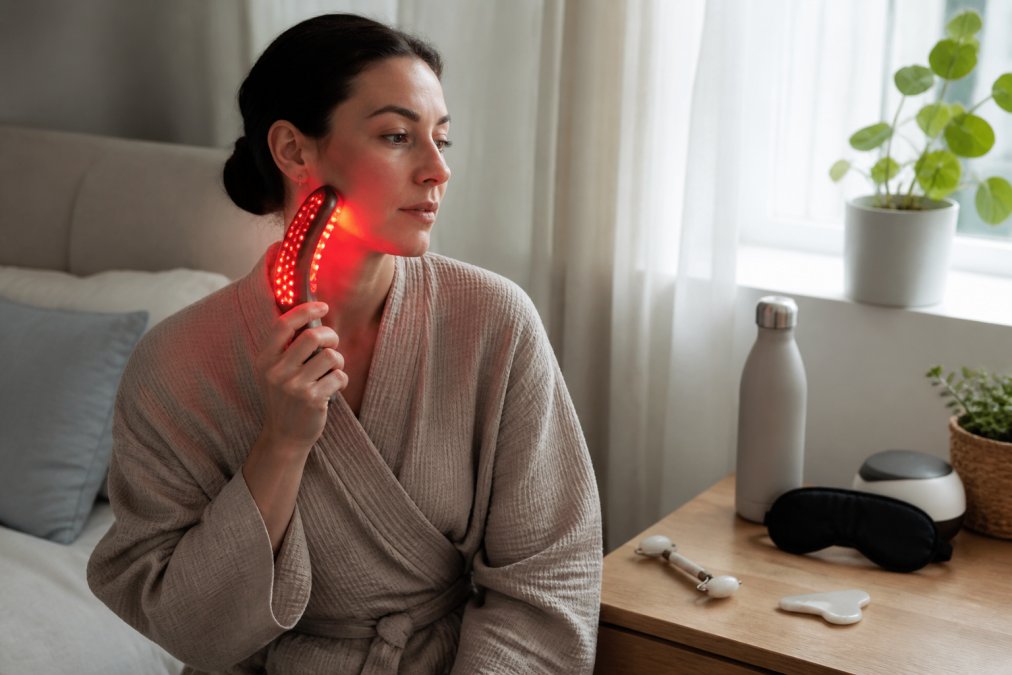
For example, if sleep is your biggest issue, start with a quality sleep mask. If recovery is the priority, begin with a red light therapy device. If stress and focus are the problems, a meditation app or light therapy tool makes sense first.
Evaluate Your Recovery and Sleep Priorities
Recovery and sleep are where modern wellness gadgets deliver the most measurable impact. These two areas also work together, better sleep improves recovery, and better recovery improves sleep quality.
Ask yourself these questions:
- Do I wake up sore or stiff most mornings?
- Do I struggle to fall asleep or stay asleep?
- Do I feel mentally sharp or foggy during the day?
- Am I training hard and need faster muscle recovery?
Your answers point you toward which device category matters most right now. If soreness and recovery dominate your concerns, red light therapy or ice bath exposure addresses that directly. If sleep quality is the bottleneck, a sleep-optimized wearable or sleep mask becomes your starting point.
Step 2: How to Build a Digital Wellness Routine That Actually Sticks
Building a digital wellness routine is fundamentally about habit stacking, connecting your wellness tech to behaviors you already do every day. You don't create a new routine from scratch. You anchor your tech to an existing one.
The most successful wellness tech users don't treat their devices as standalone activities. They integrate them into morning rituals, post-workout windows, or bedtime sequences.
Create Your Morning Baseline
Your morning is the easiest anchor point for wellness tech. Most people have a consistent morning sequence: shower, breakfast, getting ready for the day. This is where you measure baseline metrics and set your nervous system for the day ahead.
Anchor Tech to Existing Habits
Habit stacking works like this: you have an existing habit (brushing teeth, making coffee, post-workout stretch). You attach your new tech behavior immediately before or after it.
Portable Red Light Therapy Wand for →
Here's what this looks like in practice:
- Post-workout: Immediately after exercise, use your ice bath bucket or red light therapy device while your muscles are primed for recovery
- Evening wind-down: Put on your wireless sleep mask 30 minutes before bed, as part of your transition into sleep mode
- Lunch break: Five minutes with a focus support device to reset mental energy for the afternoon
- Bedtime: Use your sleep tracking wearable as the last thing you check before turning off your phone
Step 3: Master the Best Smart Devices for Recovery and Sleep
Recovery and sleep are where modern wellness gadgets deliver measurable, fast results. These two areas also create a feedback loop, better sleep accelerates recovery, and faster recovery improves sleep quality.

Sleep Optimization With Wearables and Sleep Masks
Quality sleep is the foundation of everything else. A wireless sleep mask like the Comf model blocks light completely while delivering binaural stereo sound for guided sleep audio. Ten hours of battery life means you're not managing charging every night.
Physical Recovery Through Red Light and Cold Exposure
Red light therapy works through a biological mechanism called photobiomodulation. Light at specific wavelengths (630nm, 660nm, 850nm) penetrates tissue and supports ATP production in your cells. This translates to faster muscle recovery, reduced soreness, and improved skin health.
Step 4: Manage Screen Time and Blue Light Exposure
Screen time is the invisible saboteur of sleep quality and mental clarity. Most people spend 8-12 hours daily staring at screens that emit blue light, which suppresses melatonin production and keeps your nervous system in a state of alertness.
The practical approach:
- Set screen cutoff times: No screens 60 minutes before bed. Use that time for your sleep mask, red light therapy, or meditation instead.
- Use blue light filters: Most phones and computers have built-in blue light reduction modes. Enable them after sunset.
- Create physical boundaries: Keep devices out of the bedroom. If you use a sleep mask with audio, that's your one exception.
Step 5: Avoid Data Fatigue and Notification Overload
This is where integrating wellness tech into daily routine breaks down for most people. They get overwhelmed by data.
Step 6: Track Progress Without Obsessing Over Metrics
Progress tracking should motivate you, not paralyze you. The goal is noticing real improvements in how you feel, sleep, recover, and perform.
Here's the practical approach:
- Track outcomes, not just data: Yes, your wearable shows sleep metrics. But how do you actually feel when you wake up? That subjective experience matters more than the numbers.
- Use weekly reviews, not daily obsession: Check your progress once per week, not every morning. This prevents reactive decision-making based on normal daily fluctuations.
- Measure what matters: If you started because sleep was broken, measure sleep quality improvement. If recovery was the goal, measure reduced soreness. Don't track metrics unrelated to your original objective.
- Give interventions time: Most wellness tech takes 2-4 weeks to show measurable results. Don't judge effectiveness after three days.
Common Mistakes When Integrating Wellness Tech
Most people make the same mistakes when adopting wellness technology. Knowing these patterns helps you avoid them.
Sleep Foundation research on sleep quality improvements
National Institutes of Health studies on photobiomodulation
Frequently Asked Questions
How do I know which wellness tech devices are worth the investment?
Start by identifying your biggest wellness gap: poor sleep, slow recovery, or stress. Choose one device that directly addresses that need rather than buying multiple gadgets at once. Look for products with clear use cases, like a red light therapy wand for cognitive focus or a sleep mask for better rest. Read reviews from users with similar goals, and prioritize devices that integrate with your existing routine rather than requiring entirely new habits.
What's the best way to build a digital wellness routine without feeling overwhelmed?
Begin with a single device and use it consistently for two weeks before adding another. Anchor your wellness tech to habits you already do, like using a sleep mask when you go to bed or a red light therapy wand during your morning coffee. Set one specific goal per device (better focus, faster recovery, deeper sleep) and track only that metric. Avoid checking multiple apps or devices simultaneously, which creates data fatigue rather than clarity.
Can budget-friendly wellness tech work as well as premium options?
Quality matters more than price. A well-designed portable red light therapy wand at a reasonable price point delivers real results if it uses proven wavelengths and has reliable battery life. However, the cheapest option isn't always the best value. Look for devices with safety certifications, clear specifications, and customer reviews confirming actual results. TresAdore's curated selection focuses on products that deliver genuine benefits without unnecessary markup, balancing quality and affordability.
How do I balance integrating wellness tech with avoiding screen time?
Wellness tech that doesn't require constant app checking is ideal. Devices like sleep masks and red light therapy wands work independently without screen interaction. For wearables that do use apps, set a specific time once daily to review data rather than checking notifications throughout the day. Use your device to reduce screen time overall, such as using a sleep mask to wind down before bed instead of scrolling your phone.


